

Introduction
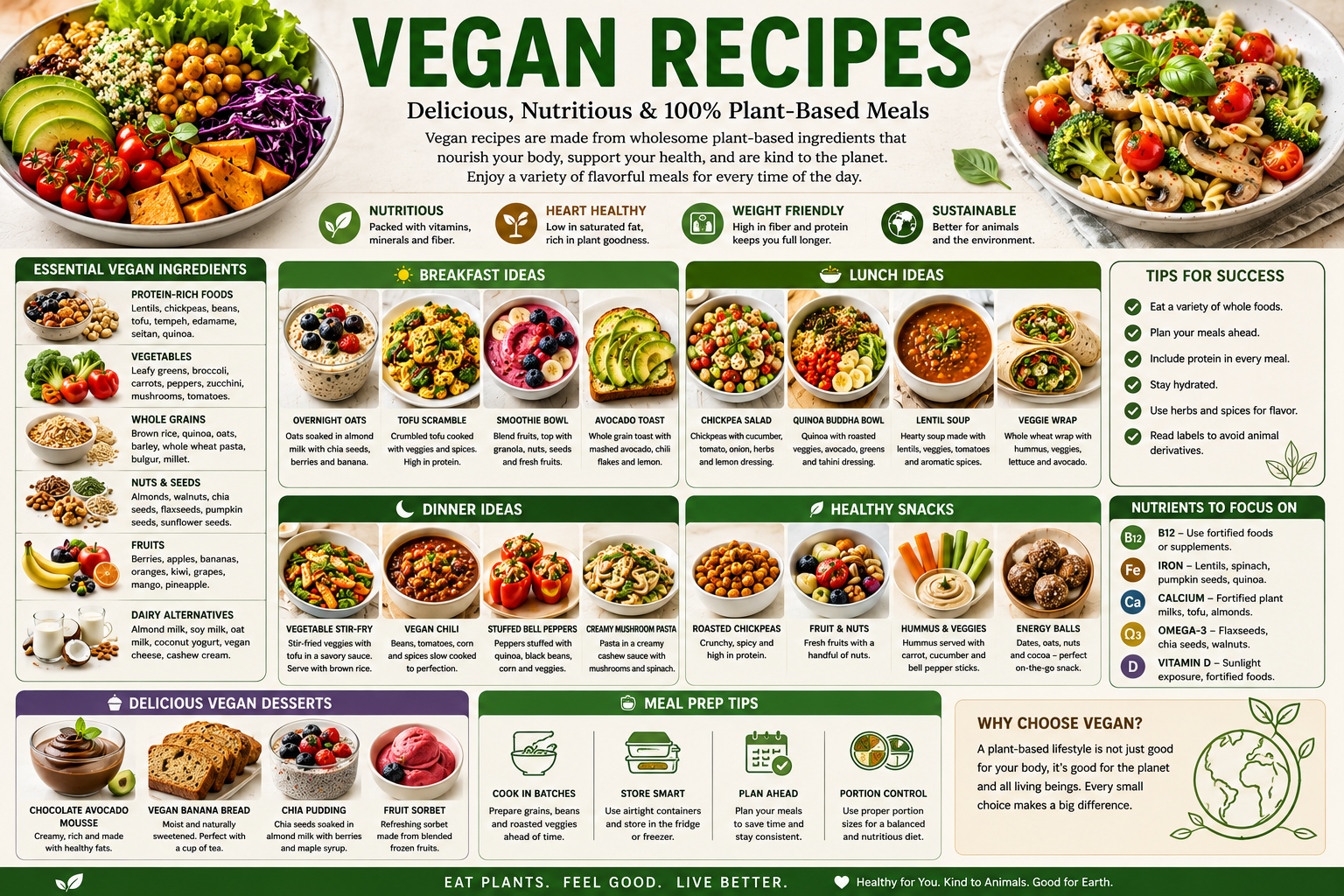
Vegan recipes have become increasingly popular as more people embrace plant-based eating for health, environmental, and ethical reasons. A vegan diet excludes all animal-derived ingredients, including meat, poultry, seafood, dairy products, eggs, and honey, while focusing on nutritious foods sourced entirely from plants.
Contrary to common misconceptions, vegan meals are far from limited. With a wide variety of vegetables, fruits, legumes, whole grains, nuts, seeds, and plant-based alternatives, vegan cooking offers endless opportunities to prepare delicious and satisfying meals.
Whether you are new to a plant-based lifestyle or simply looking to incorporate more meat-free meals into your routine, this guide covers everything you need to know about vegan recipes, including their benefits, essential ingredients, meal ideas, cooking tips, and frequently asked questions.
What Are Vegan Recipes?
Vegan recipes are meals made exclusively from plant-based ingredients. They avoid all animal products while emphasizing fresh, wholesome foods that provide essential nutrients.
Common ingredients found in vegan recipes include:
- Fresh vegetables
- Fruits
- Whole grains
- Legumes
- Beans
- Lentils
- Chickpeas
- Nuts
- Seeds
- Plant-based milk
- Tofu
- Tempeh
- Herbs and spices
These ingredients create balanced meals that are flavorful, nutritious, and suitable for a vegan lifestyle.
Benefits of Vegan Recipes
A well-planned vegan diet offers several nutritional and lifestyle benefits.
Rich in Nutrients
Plant-based meals often contain high levels of vitamins, minerals, antioxidants, and dietary fiber.
Supports Heart Health
Many vegan recipes are naturally low in saturated fat while providing heart-healthy nutrients from vegetables, legumes, nuts, and seeds.
Encourages Healthy Weight Management
High-fiber foods help promote fullness, making it easier to maintain balanced eating habits.
Supports Digestive Health
Whole grains, fruits, vegetables, and legumes provide dietary fiber that supports healthy digestion.
Promotes Sustainable Eating
Plant-based meals generally require fewer natural resources than animal-based foods, making them an environmentally conscious choice.
Essential Ingredients for Vegan Cooking
Keeping a variety of plant-based staples makes everyday cooking simple.
Vegetables
- Spinach
- Broccoli
- Cauliflower
- Bell peppers
- Carrots
- Mushrooms
- Zucchini
- Sweet potatoes
Fruits
- Bananas
- Apples
- Berries
- Mangoes
- Oranges
- Grapes
- Pineapple
- Avocados
Protein Sources
- Tofu
- Tempeh
- Lentils
- Chickpeas
- Black beans
- Kidney beans
- Edamame
Whole Grains
- Brown rice
- Quinoa
- Oats
- Whole wheat pasta
- Barley
- Farro
Healthy Fats
- Olive oil
- Avocados
- Almonds
- Walnuts
- Chia seeds
- Flaxseeds
- Pumpkin seeds
Dairy Alternatives
- Almond milk
- Soy milk
- Oat milk
- Coconut yogurt
- Vegan cheese
Foods to Avoid on a Vegan Diet
Vegan recipes exclude all animal-derived ingredients.
These include:
- Beef
- Chicken
- Fish
- Shellfish
- Eggs
- Milk
- Butter
- Cheese
- Yogurt made from dairy
- Honey
- Gelatin
Always check ingredient labels, as some processed foods may contain hidden animal-derived ingredients.
Vegan Breakfast Recipes
A plant-based breakfast can be both filling and nutritious.
Overnight Oats
Rolled oats soaked in almond milk with chia seeds, berries, and sliced bananas.
Tofu Scramble
Crumbled tofu cooked with turmeric, spinach, mushrooms, onions, and peppers.
Smoothie Bowl
Blend frozen fruit with plant-based milk and top with granola, nuts, and seeds.
Peanut Butter Banana Toast
Whole grain toast topped with peanut butter and fresh banana slices.
Vegan Lunch Recipes
Simple lunches provide lasting energy throughout the day.
Chickpea Salad
Chickpeas mixed with cucumbers, tomatoes, onions, parsley, lemon juice, and olive oil.
Quinoa Buddha Bowl
Quinoa served with roasted vegetables, avocado, black beans, and tahini dressing.
Lentil Soup
A hearty soup prepared with lentils, carrots, celery, tomatoes, and herbs.
Vegan Wrap
Whole wheat tortilla filled with hummus, spinach, roasted vegetables, and avocado.
Vegan Dinner Recipes
Dinner offers countless opportunities for creative plant-based cooking.
Vegetable Stir-Fry
Fresh vegetables sautéed with tofu and served over brown rice.
Vegan Chili
Beans, tomatoes, corn, peppers, onions, and spices cooked into a hearty meal.
Stuffed Bell Peppers
Bell peppers filled with quinoa, black beans, vegetables, and herbs.
Creamy Mushroom Pasta
Whole wheat pasta tossed with mushrooms and a creamy dairy-free sauce.
Vegan Snack Recipes
Healthy snacks help keep energy levels steady between meals.
Popular options include:
- Roasted chickpeas
- Fresh fruit
- Mixed nuts
- Hummus with vegetables
- Rice cakes with peanut butter
- Trail mix
- Edamame
- Homemade energy balls
Vegan Dessert Recipes
Plant-based desserts can be both indulgent and nutritious.
Chocolate Avocado Mousse
A creamy dessert made with avocado, cocoa powder, and plant-based milk.
Vegan Banana Bread
A moist loaf made without eggs or dairy.
Chia Seed Pudding
Prepared with almond milk and topped with fresh berries.
Fruit Sorbet
A refreshing frozen dessert made from blended fruit.
Tips for Successful Vegan Cooking
These simple habits make vegan cooking easier and more enjoyable.
Include a Variety of Protein Sources
Rotate beans, lentils, tofu, tempeh, and legumes to create balanced meals.
Eat Colorful Vegetables
Different vegetables provide a wide range of vitamins and antioxidants.
Experiment with Herbs and Spices
Fresh herbs and seasonings add depth of flavor without relying on animal products.
Plan Balanced Meals
Include protein, healthy fats, fiber, and whole grains in every meal.
Read Food Labels
Many packaged foods may contain hidden dairy, eggs, or other animal-derived ingredients.
Common Mistakes to Avoid
Avoid these common pitfalls when following a vegan diet.
Depending Too Much on Processed Foods
Whole foods should form the foundation of a healthy vegan eating pattern.
Not Eating Enough Protein
Include protein-rich plant foods regularly throughout the day.
Ignoring Key Nutrients
Pay attention to nutrients such as vitamin B12, iron, calcium, vitamin D, omega-3 fatty acids, and zinc. Consider fortified foods or supplements if recommended by a healthcare professional.
Skipping Meal Planning
Planning meals ahead makes it easier to maintain a balanced vegan diet.
Frequently Asked Questions
Are vegan recipes healthy?
Yes. When prepared with whole, nutrient-dense ingredients, vegan meals can provide balanced nutrition and support overall health.
Can I get enough protein from vegan recipes?
Yes. Beans, lentils, tofu, tempeh, quinoa, edamame, nuts, and seeds are excellent plant-based protein sources.
Are vegan recipes suitable for children?
A well-planned vegan diet can support healthy growth, but parents should consult a pediatrician or registered dietitian to ensure children’s nutritional needs are met.
Is vegan cooking expensive?
Not necessarily. Staples such as beans, lentils, rice, oats, and seasonal vegetables are often affordable and nutritious.
Can beginners easily prepare vegan recipes?
Absolutely. Many vegan meals require simple ingredients and basic cooking techniques, making them ideal for beginners.
Final Thoughts
Vegan recipes make it easy to enjoy flavorful, satisfying meals while embracing a plant-based lifestyle. By focusing on fresh vegetables, fruits, legumes, whole grains, nuts, seeds, and plant-based proteins, you can create balanced meals that are both nutritious and delicious.
Whether you’re preparing a quick breakfast, a hearty lunch, a wholesome dinner, healthy snacks, or dairy-free desserts, vegan cooking offers endless variety and creativity. With thoughtful meal planning and a diverse selection of ingredients, vegan recipes can become a practical, enjoyable, and sustainable part of everyday healthy eating.