

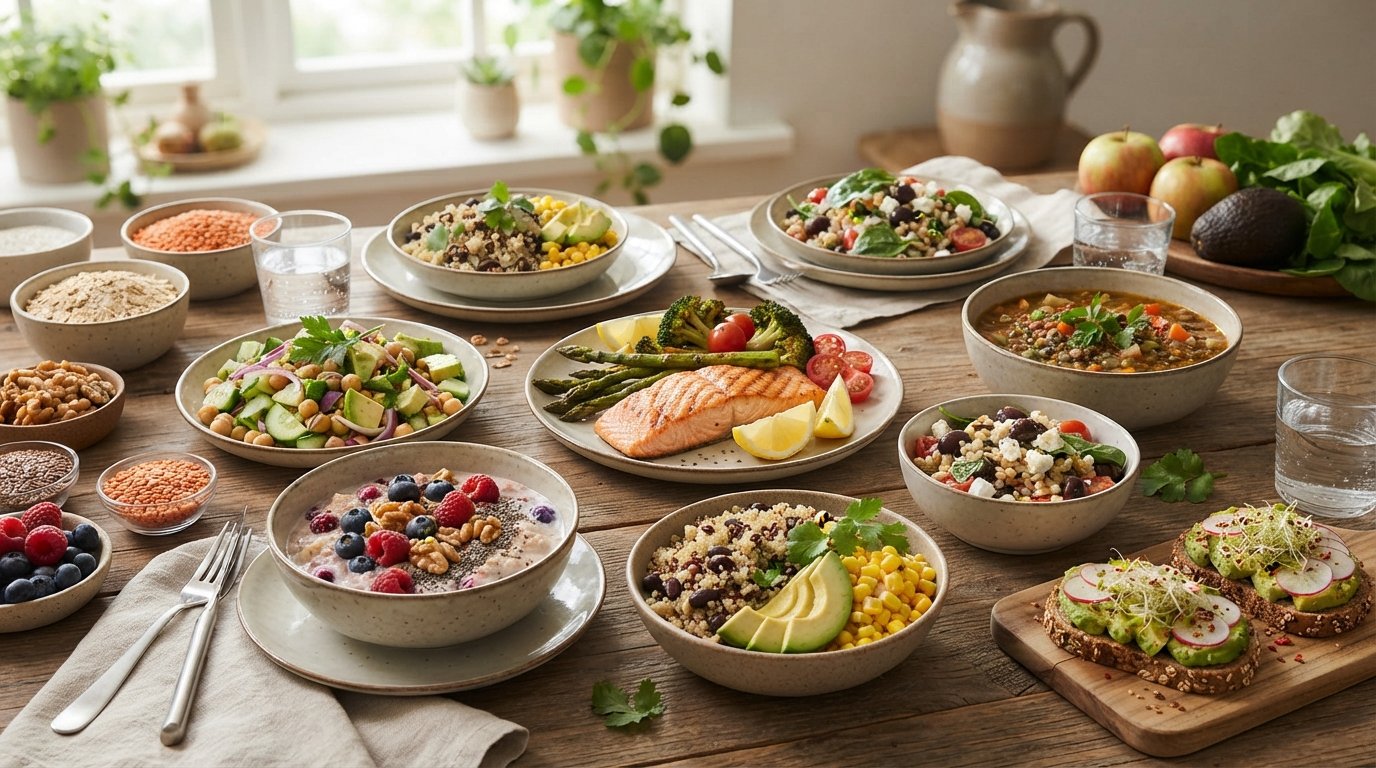
Cholesterol is an essential substance that the body needs to build cells and produce certain hormones. However, having too much low-density lipoprotein cholesterol, commonly called LDL cholesterol, can increase the risk of cardiovascular disease over time.
Diet is one important part of managing cholesterol levels. Rather than relying on one “cholesterol-lowering” food, a more effective approach is to build meals around soluble fiber, vegetables, fruits, whole grains, legumes, nuts, seeds, and sources of unsaturated fats while limiting excessive saturated and trans fats.
The following healthy recipes for lowering cholesterol naturally are designed around these principles. They are practical, flavorful, and suitable for everyday meals.
How Diet Can Support Healthy Cholesterol Levels
Different foods can affect cholesterol in different ways. Soluble fiber, found in foods such as oats, beans, lentils, apples, and some vegetables, can help reduce the absorption of cholesterol in the digestive tract.
Replacing foods high in saturated fat with sources of unsaturated fat can also support healthier blood cholesterol levels. Nuts, seeds, avocado, olive oil, and oily fish are useful choices.
A heart-conscious eating pattern should also include plenty of vegetables, fruits, whole grains, and legumes.
Key Foods to Include in Cholesterol-Friendly Recipes
Oats and Whole Grains
Oats contain soluble fiber, including beta-glucan. Other whole grains such as barley and whole-grain breads can also contribute fiber to the diet.
Beans and Lentils
Legumes are rich in fiber and can provide plant-based protein. They can be added to soups, salads, wraps, and main dishes.
Fruits and Vegetables
Fruits and vegetables provide fiber, vitamins, minerals, and a variety of beneficial plant compounds.
Nuts and Seeds
Almonds, walnuts, chia seeds, and flaxseeds provide fiber and unsaturated fats. Because they are calorie-dense, reasonable portions are important.
Fatty Fish
Salmon, sardines, and other oily fish provide omega-3 fatty acids and can be included as part of a heart-healthy eating pattern.
Olive Oil
Extra-virgin olive oil can be used in place of butter and other fats higher in saturated fat.
1. Berry and Walnut Oatmeal
This simple breakfast combines oats, berries, and walnuts for a fiber-rich start to the day.
Ingredients
- 1/2 cup rolled oats
- 1 cup low-fat milk or unsweetened plant-based milk
- 1/2 cup blueberries
- 1/2 cup strawberries
- 1 tablespoon chopped walnuts
- 1 teaspoon ground flaxseed
- 1/2 teaspoon cinnamon
Preparation
Add oats and milk to a saucepan and cook over medium heat until creamy.
Transfer to a bowl and top with berries, walnuts, flaxseed, and cinnamon.
Serve warm.
Why It Works
Oats provide soluble fiber, while berries add additional fiber and plant compounds. Walnuts and flaxseed provide unsaturated fats.
2. Lentil and Vegetable Soup
Lentil soup is an affordable and filling way to increase both fiber and plant-based protein.
Ingredients
- 1 cup cooked lentils
- 1 carrot, chopped
- 1 celery stalk, chopped
- 1/2 onion, diced
- 1 cup chopped tomatoes
- 2 cups low-sodium vegetable broth
- 1 teaspoon olive oil
- 2 garlic cloves, minced
- 1/2 teaspoon cumin
- Black pepper
- Fresh parsley
Preparation
Heat olive oil in a large pot.
Add onion, carrot, celery, and garlic. Cook until the vegetables begin to soften.
Add lentils, tomatoes, broth, cumin, and black pepper.
Simmer until the vegetables are tender.
Garnish with fresh parsley before serving.
Why It Works
Lentils are naturally high in fiber and can help replace some meals that would otherwise rely heavily on meat.
3. Grilled Salmon With Roasted Vegetables
Salmon makes an excellent centerpiece for a heart-conscious dinner.
Ingredients
- 4 to 5 ounces salmon
- 1 cup broccoli
- 1/2 cup zucchini
- 1/2 cup bell pepper
- 1 teaspoon extra-virgin olive oil
- Lemon juice
- Garlic
- Black pepper
- Fresh dill
Preparation
Season the salmon with lemon juice, dill, garlic, and black pepper.
Place the salmon and vegetables on a baking tray.
Lightly coat the vegetables with olive oil.
Roast until the vegetables are tender and the salmon is fully cooked.
Why It Works
Salmon provides protein and omega-3 fatty acids. Replacing foods high in saturated fat with fish and unsaturated fats can support a heart-conscious eating pattern.
4. Chickpea and Avocado Salad
This quick salad requires little preparation and can work as a light lunch.
Ingredients
- 1 cup cooked chickpeas
- 1/2 avocado
- 1 cup cucumber
- 1 cup cherry tomatoes
- 1/4 red onion
- Fresh parsley
- 1 teaspoon olive oil
- Lemon juice
- Black pepper
Preparation
Combine chickpeas, avocado, cucumber, tomatoes, and onion in a bowl.
Add olive oil and lemon juice.
Season with black pepper and parsley, then toss gently.
Why It Works
Chickpeas provide fiber and plant protein, while avocado and olive oil provide predominantly unsaturated fats.
5. Apple and Chia Overnight Oats
Overnight oats are useful when you want breakfast prepared in advance.
Ingredients
- 1/2 cup rolled oats
- 1 tablespoon chia seeds
- 1 small apple, diced
- 3/4 cup low-fat or unsweetened plant-based milk
- 1/2 teaspoon cinnamon
- 1 tablespoon walnuts
- Plain yogurt, optional
Preparation
Combine oats, chia seeds, milk, apple, and cinnamon in a sealed container.
Refrigerate overnight.
Add walnuts and yogurt before serving.
Why It Works
Oats, chia seeds, apples, and walnuts contribute fiber and healthy fats. The recipe can be prepared the night before, making it convenient for busy mornings.
6. Black Bean and Quinoa Bowl
This plant-based bowl is satisfying without relying on large amounts of saturated fat.
Ingredients
- 1/2 cup cooked quinoa
- 1/2 cup black beans
- 1/2 cup corn
- 1/2 cup bell pepper
- 1/2 cup tomatoes
- 1/4 avocado
- Fresh cilantro
- Lime juice
- 1 teaspoon olive oil
Preparation
Place quinoa in a bowl.
Add black beans, corn, bell pepper, tomatoes, and avocado.
Drizzle with olive oil and lime juice.
Add cilantro and serve.
Why It Works
Quinoa and black beans provide fiber and plant-based protein, while avocado and olive oil provide unsaturated fats.
7. Mediterranean Barley Salad
Barley is a whole grain that can add substantial fiber to meals.
Ingredients
- 1 cup cooked barley
- 1 cup cucumber
- 1 cup tomatoes
- 1/2 cup spinach
- 1/4 cup chickpeas
- Fresh parsley
- 1 teaspoon olive oil
- Lemon juice
- Black pepper
Preparation
Allow the cooked barley to cool.
Combine it with cucumber, tomatoes, spinach, chickpeas, and parsley.
Add olive oil, lemon juice, and black pepper.
Mix well and serve chilled or at room temperature.
Why It Works
Barley provides soluble fiber, while chickpeas and vegetables increase the overall fiber content of the meal.
8. Avocado and Whole-Grain Toast
A simple breakfast can still fit into a cholesterol-conscious eating pattern.
Ingredients
- 1 to 2 slices whole-grain bread
- 1/2 avocado
- Tomato slices
- 1 teaspoon chia seeds
- Lemon juice
- Black pepper
Preparation
Toast the bread.
Mash avocado with lemon juice and spread it over the toast.
Add tomato slices and chia seeds.
Finish with black pepper.
Why It Works
Whole-grain bread provides fiber, while avocado and chia seeds provide predominantly unsaturated fats.
9. Mediterranean Tuna and Bean Salad
This protein-rich salad works well for lunch.
Ingredients
- 1 can tuna packed in water
- 1/2 cup white beans
- 1 cup tomatoes
- 1/2 cup cucumber
- 1/4 red onion
- Fresh parsley
- 1 teaspoon olive oil
- Lemon juice
- Black pepper
Preparation
Drain the tuna and beans.
Combine all ingredients in a bowl.
Add olive oil and lemon juice.
Season with black pepper and parsley.
Why It Works
Beans add fiber while tuna provides protein. Using olive oil instead of a mayonnaise-heavy dressing can reduce the amount of saturated fat in the meal.
10. Vegetable and Bean Whole-Grain Wrap
A fiber-rich wrap can make a convenient lunch or light dinner.
Ingredients
- 1 whole-grain tortilla
- 1/2 cup cooked black beans
- 1/2 cup shredded carrot
- 1/2 cup cucumber
- 1/2 cup spinach
- 1/4 avocado
- Tomato
- Lemon juice
Preparation
Place the tortilla on a clean surface.
Add beans, spinach, carrot, cucumber, tomato, and avocado.
Drizzle with lemon juice.
Roll tightly and cut into smaller portions.
Why It Works
Whole grains, beans, and vegetables provide a combination of fiber and other nutrients without relying on processed meat or heavy sauces.
11. Oat and Banana Breakfast Pancakes
These pancakes use oats rather than refined flour as their primary carbohydrate source.
Ingredients
- 1 ripe banana
- 1/2 cup rolled oats
- 1 egg
- 1/2 teaspoon cinnamon
- 1/4 cup low-fat milk
- 1 teaspoon ground flaxseed
- Fresh berries for topping
Preparation
Blend the banana, oats, egg, milk, cinnamon, and flaxseed until combined.
Heat a nonstick pan.
Pour small amounts of batter into the pan and cook until bubbles appear. Flip and cook the other side.
Serve with fresh berries.
Why It Works
Oats and flaxseed increase the fiber content while fruit provides additional nutrients. Avoid loading the pancakes with butter or large amounts of sugary syrup.
12. Brown Rice and Vegetable Stir-Fry
A vegetable stir-fry can become a complete meal with the right ingredients.
Ingredients
- 1 cup cooked brown rice
- 1 cup broccoli
- 1/2 cup carrots
- 1/2 cup bell peppers
- 1/2 cup mushrooms
- 1/2 cup tofu
- 1 teaspoon olive or sesame oil
- Low-sodium soy sauce
- Fresh ginger
- Garlic
Preparation
Heat the oil in a large skillet.
Add tofu and cook until lightly browned.
Add vegetables, ginger, and garlic.
Stir-fry until the vegetables are tender but still crisp.
Add cooked brown rice and a small amount of low-sodium soy sauce.
Mix well and serve.
Why It Works
Brown rice, vegetables, and tofu provide fiber, plant protein, and other nutrients. Using a small amount of oil keeps the meal lighter.
Foods to Limit When Managing Cholesterol
Adding healthy foods is important, but reducing certain foods can be equally useful.
Consider limiting foods that are particularly high in saturated fat, such as:
- Fatty cuts of meat
- Processed meats
- Butter
- Full-fat dairy products
- Cream
- Some fried foods
- Foods made with large amounts of coconut or palm oil
- Commercial baked goods high in saturated fat
Trans fats should be avoided as much as possible.
Instead, choose foods such as fish, beans, lentils, nuts, seeds, vegetables, whole grains, and unsaturated plant oils more often.
Easy Ways to Make Meals More Cholesterol-Friendly
You do not need to completely redesign your diet. Small substitutions can make a meaningful difference over time.
Replace Butter With Olive Oil
Use extra-virgin olive oil for cooking, roasting, or salad dressings when appropriate.
Choose Whole Grains
Replace refined grains with oats, barley, brown rice, quinoa, and whole-grain bread.
Add Beans to Meals
Beans can replace part of the meat in soups, tacos, salads, and bowls.
Eat More Vegetables
Add vegetables to pasta, omelets, rice dishes, sandwiches, and wraps.
Choose Nuts Instead of Highly Processed Snacks
A modest serving of unsalted nuts can provide fiber and unsaturated fats.
Choose Fish More Often
Replacing some meals based on fatty meat with fish can help reduce saturated fat intake while adding beneficial nutrients.
Sample One-Day Cholesterol-Friendly Meal Plan
Breakfast: Berry and walnut oatmeal with cinnamon.
Lunch: Mediterranean tuna and bean salad with whole-grain bread.
Snack: Apple with a small serving of unsalted walnuts.
Dinner: Grilled salmon with roasted vegetables and barley.
Optional snack: Plain low-fat yogurt with berries.
The appropriate portion sizes depend on individual energy needs, health goals, age, activity level, and overall dietary pattern.
Practical Tips for Long-Term Success
Make Changes Gradually
Trying to completely change your diet overnight often makes healthy eating difficult to maintain. Start by replacing a few high-saturated-fat foods with higher-fiber and unsaturated-fat alternatives.
Read Nutrition Labels
Pay attention to saturated fat, trans fat, dietary fiber, and serving sizes when comparing packaged foods.
Cook More Often at Home
Home cooking gives you greater control over the amount of butter, oil, salt, sugar, and processed ingredients used in your meals.
Build Meals Around Plants
Try making vegetables, beans, lentils, whole grains, fruits, nuts, and seeds regular parts of your meals rather than occasional additions.
Stay Consistent
Cholesterol management is not about one perfect meal. Your overall eating pattern matters much more than an individual recipe.
Final Thoughts
The best healthy recipes for lowering cholesterol naturally focus on a consistent heart-conscious eating pattern rather than a single miracle ingredient. Meals built around oats, barley, beans, lentils, vegetables, fruits, whole grains, nuts, seeds, olive oil, and fish can help increase fiber and unsaturated fats while reducing reliance on foods high in saturated fat.
Recipes such as berry oatmeal, lentil soup, grilled salmon, chickpea salad, quinoa bowls, and vegetable wraps make these principles practical for everyday cooking.
Diet is only one part of cardiovascular health. Regular physical activity, maintaining a healthy weight when appropriate, avoiding smoking, managing blood pressure, and following medical advice can also matter.
If you have high cholesterol or have been prescribed cholesterol-lowering medication, do not stop or change your medication based solely on dietary changes. Work with a healthcare professional to determine the most appropriate approach for your individual health needs.