

Europe is home to some of the world’s most celebrated desserts, with each country offering unique recipes that have been passed down through generations. From delicate French pastries and rich Italian treats to comforting British puddings and creamy Eastern European cakes, European desserts reflect centuries of culinary tradition and craftsmanship.
Many of these classic sweets are made with simple, high-quality ingredients such as butter, eggs, flour, chocolate, cream, fresh fruit, and nuts. Their timeless appeal has made them popular far beyond Europe, inspiring home bakers and professional pastry chefs around the world.
Whether you are planning a special occasion, looking for baking inspiration, or simply have a sweet tooth, these traditional European desserts deserve a place in your kitchen.
What Makes European Desserts Special?
European desserts are known for their balance of flavor, texture, and presentation. Rather than relying on excessive sweetness, many recipes highlight natural ingredients and carefully developed baking techniques.
Some common ingredients found in traditional European desserts include:
- Butter
- Flour
- Eggs
- Fresh cream
- Chocolate
- Vanilla
- Seasonal fruits
- Almonds and hazelnuts
- Honey
- Cinnamon
These ingredients create desserts that range from light and elegant to rich and indulgent.
Best Traditional European Desserts
Tiramisu (Italy)
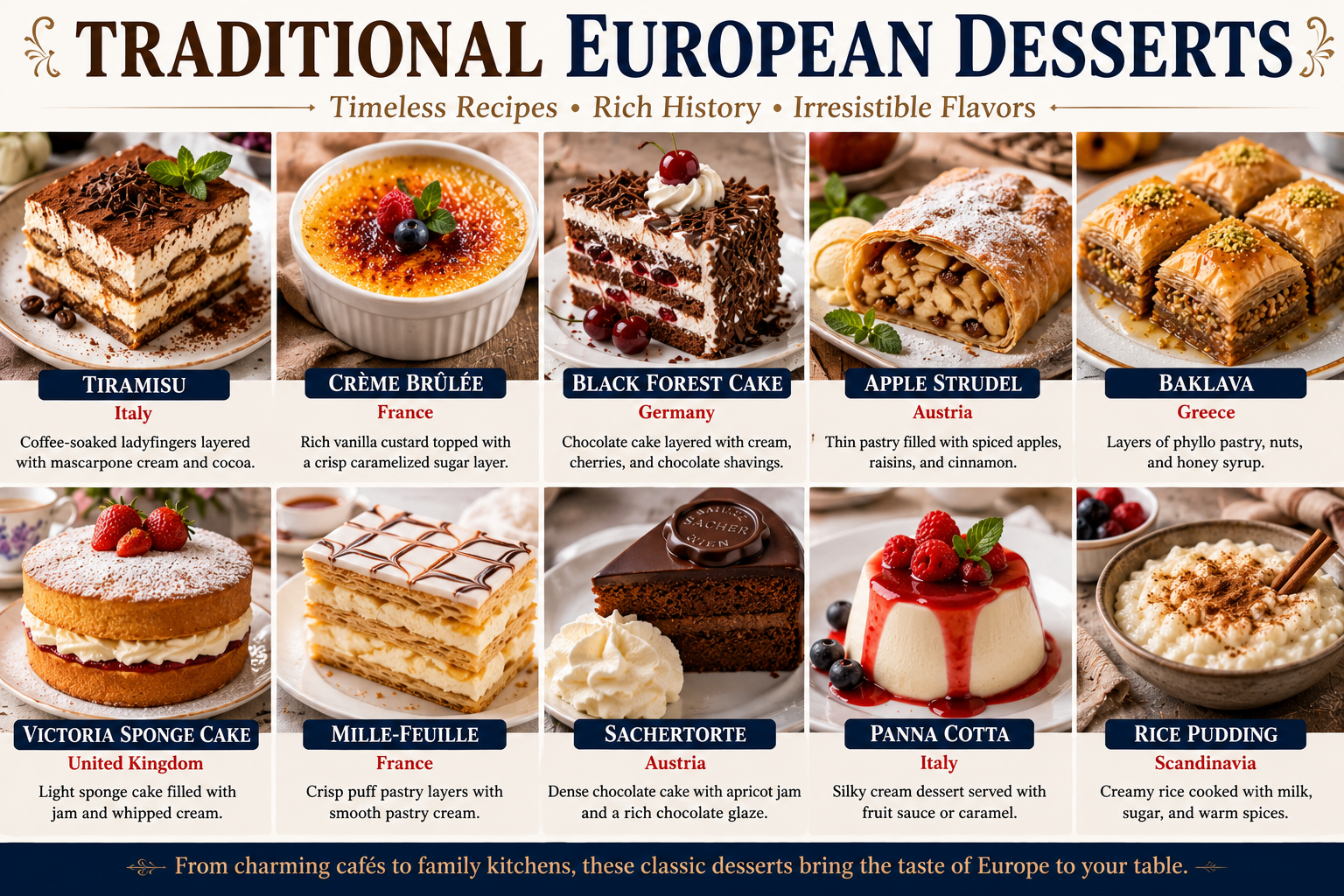
Tiramisu is one of Italy’s most famous desserts. It features layers of coffee-soaked ladyfingers, mascarpone cheese, cocoa powder, and whipped cream. Its creamy texture and balanced coffee flavor make it a favorite around the world.
Crème Brûlée (France)
Crème Brûlée is a classic French dessert made with a rich vanilla custard topped with a thin layer of caramelized sugar. The crisp sugar topping contrasts beautifully with the smooth, creamy custard beneath.
Black Forest Cake (Germany)
Black Forest Cake combines layers of chocolate sponge cake with whipped cream and cherries. Finished with chocolate shavings, this iconic German dessert is rich, elegant, and perfect for celebrations.
Apple Strudel (Austria)
Apple Strudel features thin layers of delicate pastry wrapped around a filling of apples, raisins, cinnamon, and sugar. It is often served warm with whipped cream or vanilla sauce.
Baklava (Greece)
Baklava is a popular Greek dessert made from layers of crisp phyllo pastry filled with chopped nuts and sweetened with honey or syrup. Its flaky texture and rich flavor have made it a favorite across Europe and the Middle East.
Victoria Sponge Cake (United Kingdom)
This classic British cake consists of two light sponge layers filled with strawberry jam and whipped cream or buttercream. It is traditionally served with tea and remains one of the United Kingdom’s most beloved desserts.
Mille-Feuille (France)
Also known as the Napoleon pastry, Mille-Feuille is made with layers of flaky puff pastry and smooth pastry cream, finished with a decorative icing glaze. Its delicate texture makes it a classic French bakery favorite.
Sachertorte (Austria)
Sachertorte is a rich chocolate cake layered with apricot jam and coated in a glossy chocolate glaze. Originally created in Vienna, it remains one of Austria’s most famous desserts.
Panna Cotta (Italy)
Panna Cotta is a silky Italian dessert made with sweetened cream set with gelatin. It is commonly served with fresh berries, fruit sauce, or caramel for a simple yet elegant finish.
Rice Pudding (Scandinavia)
Rice pudding has long been a comforting dessert throughout Scandinavian countries. Made with rice, milk, sugar, cinnamon, and vanilla, it is especially popular during the winter and holiday season.
Tips for Making Traditional European Desserts
Using high-quality butter, fresh eggs, real vanilla, and premium chocolate can significantly improve the flavor of homemade desserts. Measuring ingredients accurately also helps achieve the correct texture, especially for cakes, pastries, and custards.
Allowing desserts to cool properly before serving enhances both flavor and consistency. Many European desserts, including tiramisu and panna cotta, taste even better after chilling for several hours.
Fresh fruit, whipped cream, powdered sugar, and chocolate shavings provide simple yet elegant finishing touches that elevate presentation.
Why European Desserts Remain Popular
Traditional European desserts continue to be loved because they combine simple ingredients with time-tested baking techniques. Their rich history and regional diversity have helped them become staples in bakeries, restaurants, and family kitchens across the globe.
Many of these recipes have remained unchanged for generations, preserving authentic flavors while inspiring modern variations that suit contemporary tastes.
Conclusion
Traditional European desserts offer an impressive variety of flavors, textures, and baking styles that showcase the rich culinary heritage of the continent. From creamy Italian Tiramisu and elegant French Crème Brûlée to Austrian Apple Strudel and Germany’s famous Black Forest Cake, each dessert tells a story of tradition and craftsmanship.
Whether you are an experienced baker or just beginning your baking journey, these classic European desserts are excellent recipes to explore. Their timeless appeal ensures they remain favorites for family gatherings, celebrations, and everyday treats.