

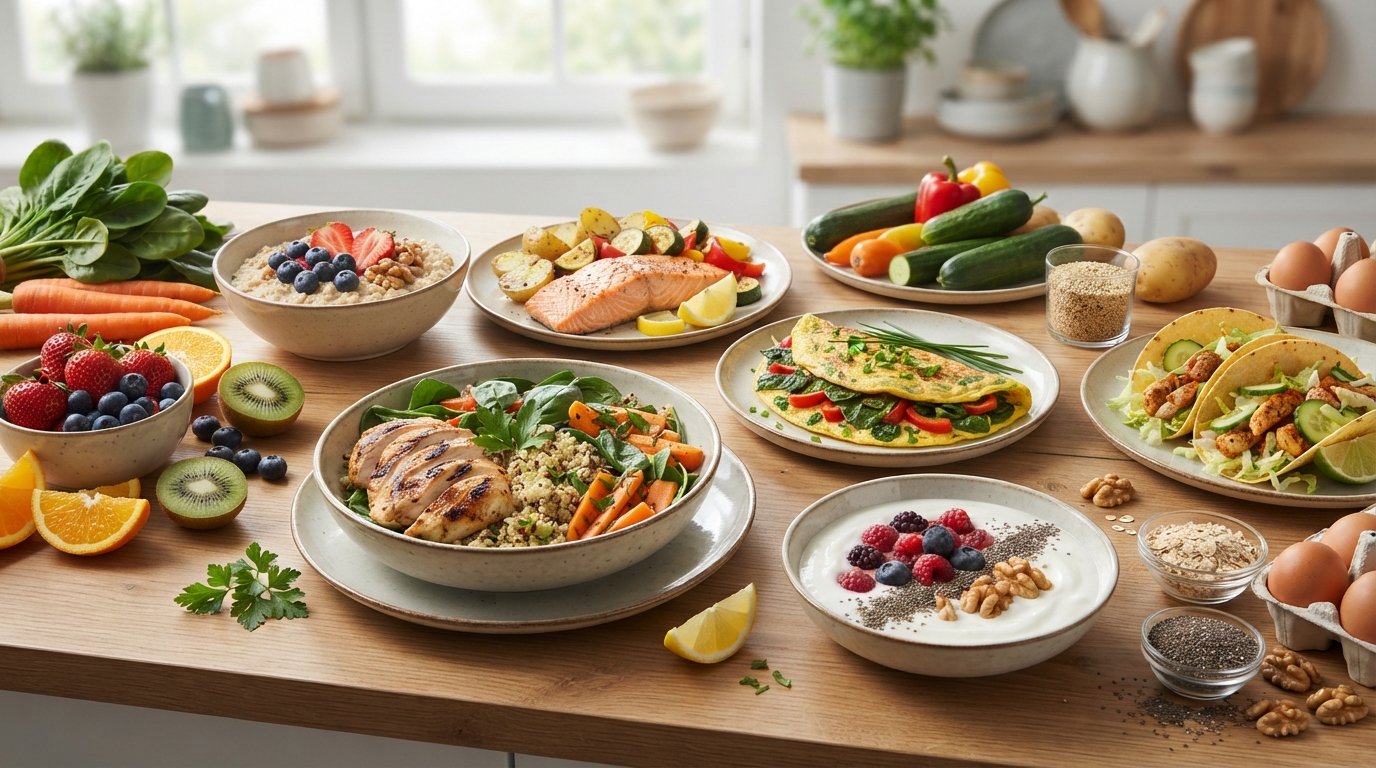
Digestive discomfort can make everyday meals frustrating, especially for people who notice symptoms such as bloating, abdominal pain, excessive gas, or changes in bowel habits after eating certain foods. A low-FODMAP diet can be useful for some people with irritable bowel syndrome (IBS) because it temporarily reduces certain fermentable carbohydrates that can be difficult to digest or absorb.
However, low-FODMAP eating is not simply about avoiding as many foods as possible. It is a structured dietary approach that is generally intended to be followed in phases, ideally with guidance from a registered dietitian or qualified healthcare professional. The goal is to identify individual food triggers while maintaining a nutritious and varied diet.
This guide features practical low-FODMAP recipes for better digestion, including breakfast ideas, lunches, dinners, snacks, and simple meal combinations.
What Is a Low-FODMAP Diet?
FODMAP stands for fermentable oligosaccharides, disaccharides, monosaccharides, and polyols. These are short-chain carbohydrates that may be poorly absorbed in the small intestine in some people.
When they reach the large intestine, gut bacteria ferment them. This can contribute to symptoms such as gas, bloating, abdominal discomfort, and altered bowel habits in people who are sensitive to them.
Common high-FODMAP foods can include certain amounts of:
- Onions
- Garlic
- Some legumes
- Certain wheat-based products
- Milk and some dairy products
- Apples
- Pears
- Certain stone fruits
- Some sweeteners
- Certain vegetables
Importantly, FODMAP content depends on the food, serving size, preparation, and individual tolerance. A food should not automatically be considered completely “good” or “bad.”
Important Things to Know Before Starting
The low-FODMAP diet is usually approached in three stages:
- Restriction: Higher-FODMAP foods are temporarily reduced.
- Reintroduction: Foods or FODMAP groups are systematically tested.
- Personalization: Foods are added back according to individual tolerance.
The restriction phase is not intended to be a permanent highly restrictive diet. Long-term unnecessary restriction can reduce dietary variety and may affect the diversity of the gut microbiome.
If you have ongoing digestive symptoms, it is better to work with a qualified healthcare professional rather than attempting a highly restrictive diet without guidance.
1. Low-FODMAP Oatmeal With Blueberries
Oatmeal can be a simple breakfast when prepared with suitable ingredients and portions.
Ingredients
- 1/2 cup rolled oats
- 1 cup lactose-free milk or suitable plant-based milk
- 1/2 cup blueberries
- 1 tablespoon chia seeds, if tolerated
- 1 tablespoon walnuts
- Cinnamon
Preparation
Add oats and milk to a saucepan.
Cook over medium heat until the oats become soft and creamy.
Transfer to a bowl and top with blueberries, walnuts, chia seeds, and cinnamon.
Why It Works
Oats provide fiber, while blueberries and walnuts add additional nutrients. Using lactose-free milk can make the meal more suitable for people who have difficulty digesting lactose.
Keep portions appropriate because even low-FODMAP foods can become problematic in larger amounts.
2. Grilled Chicken and Quinoa Bowl
This simple meal provides protein, whole grains, and vegetables without relying on onion or garlic.
Ingredients
- 4 ounces chicken breast
- 1/2 cup cooked quinoa
- 1 cup spinach
- 1/2 cup carrots
- 1/2 cup red bell pepper
- 1 teaspoon garlic-infused olive oil
- Lemon juice
- Black pepper
- Fresh herbs
Preparation
Season the chicken with lemon juice, herbs, and black pepper.
Cook the chicken thoroughly in a skillet or grill pan.
Place cooked quinoa in a bowl and add spinach, carrots, and bell pepper.
Slice the chicken and place it over the quinoa.
Finish with garlic-infused olive oil and lemon juice.
Why It Works
Quinoa and chicken create a filling combination of protein and carbohydrates, while the vegetables add color and nutrients.
Garlic-infused oil can provide garlic flavor while keeping the garlic solids out of the dish, which is useful because certain FODMAPs in garlic are water-soluble rather than fat-soluble.
3. Egg and Spinach Breakfast Bowl
Eggs are naturally low in FODMAPs and can be used in many simple meals.
Ingredients
- 2 eggs
- 1 cup fresh spinach
- 1/2 cup diced tomatoes
- 1/2 cup cooked potatoes
- 1 teaspoon olive oil
- Black pepper
- Chives, optional
Preparation
Heat olive oil in a skillet.
Add potatoes and cook until lightly browned.
Add spinach and tomatoes.
Crack the eggs into the skillet and cook until they reach your preferred level of doneness.
Season with black pepper and chives.
Why It Works
Eggs provide protein, while potatoes and vegetables create a satisfying breakfast without requiring complicated preparation.
4. Low-FODMAP Chicken Rice Bowl
A rice bowl can be customized with several low-FODMAP ingredients.
Ingredients
- 4 ounces cooked chicken
- 1 cup cooked white or brown rice
- 1/2 cup carrots
- 1/2 cup cucumber
- 1/2 cup spinach
- 1/2 cup red bell pepper
- Lemon juice
- Garlic-infused olive oil
- Fresh herbs
Preparation
Place cooked rice in a bowl.
Add sliced chicken, carrots, cucumber, spinach, and bell pepper.
Drizzle with garlic-infused olive oil and lemon juice.
Add fresh herbs before serving.
Why It Works
This is an easy meal to prepare ahead of time and customize according to personal tolerance.
5. Low-FODMAP Vegetable Omelet
An omelet is a quick option for breakfast, lunch, or dinner.
Ingredients
- 2 eggs
- 1/2 cup spinach
- 1/4 cup red bell pepper
- 1/4 cup tomatoes
- Small amount of suitable cheese, optional
- 1 teaspoon olive oil
- Black pepper
Preparation
Whisk the eggs in a bowl.
Heat olive oil in a nonstick skillet.
Add vegetables and cook briefly.
Pour in the eggs and cook until mostly set.
Add cheese if desired, fold the omelet, and cook until fully set.
Why It Works
The omelet provides protein while allowing you to include a variety of vegetables without using onion or garlic.
6. Salmon With Roasted Potatoes and Vegetables
Salmon can make a satisfying low-FODMAP dinner when paired with suitable vegetables.
Ingredients
- 4 to 5 ounces salmon
- 1 cup potatoes, chopped
- 1/2 cup carrots
- 1/2 cup zucchini
- 1 teaspoon olive oil
- Lemon juice
- Dill
- Black pepper
Preparation
Place potatoes and carrots on a baking tray.
Toss them with olive oil, dill, and black pepper.
Roast until they begin to soften.
Add salmon and zucchini to the tray.
Continue cooking until the salmon is fully cooked and the vegetables are tender.
Finish with lemon juice.
Why It Works
Salmon provides protein and healthy fats, while potatoes and vegetables create a balanced meal.
7. Low-FODMAP Tuna and Potato Salad
This cold salad can be prepared in advance for lunch.
Ingredients
- 1 can tuna packed in water
- 1 cup cooked potatoes
- 1/2 cup cucumber
- 1/2 cup carrots
- Fresh parsley
- Lemon juice
- 1 teaspoon olive oil
- Black pepper
Preparation
Drain the tuna.
Combine tuna, potatoes, cucumber, carrots, and parsley.
Add lemon juice and olive oil.
Season with black pepper and refrigerate until ready to serve.
Why It Works
The combination of tuna and potatoes creates a filling meal without requiring extensive preparation.
8. Lactose-Free Yogurt and Berry Bowl
A yogurt bowl can work as breakfast, a snack, or a light meal.
Ingredients
- 3/4 cup lactose-free Greek yogurt
- 1/2 cup strawberries
- 1/4 cup blueberries
- 1 tablespoon walnuts
- Cinnamon
- Small serving of suitable low-FODMAP granola, optional
Preparation
Place yogurt in a bowl.
Add strawberries, blueberries, walnuts, and cinnamon.
Top with a small amount of suitable granola if desired.
Why It Works
Lactose-free yogurt can provide protein while reducing lactose, which is a FODMAP that can cause symptoms in lactose-sensitive individuals.
9. Low-FODMAP Chicken Tacos
Tacos can be adapted easily by choosing suitable ingredients.
Ingredients
- 4 small corn tortillas
- 4 ounces cooked chicken
- 1/2 cup lettuce
- 1/2 cup diced tomatoes
- 1/4 cup red bell pepper
- Small amount of avocado, according to tolerance
- Lime juice
- Fresh cilantro
- Cumin
Preparation
Season chicken with cumin and cook thoroughly.
Warm the corn tortillas.
Fill them with chicken, lettuce, tomatoes, and bell pepper.
Add a suitable amount of avocado, lime juice, and cilantro.
Why It Works
Corn tortillas and chicken create a simple base while fresh vegetables add flavor and texture.
10. Quinoa and Roasted Vegetable Salad
This vegetarian option can work as a lunch or side dish.
Ingredients
- 1/2 cup cooked quinoa
- 1/2 cup carrots
- 1/2 cup zucchini
- 1/2 cup red bell pepper
- 1 cup spinach
- 1 teaspoon olive oil
- Lemon juice
- Fresh parsley
Preparation
Roast the carrots, zucchini, and bell pepper with olive oil until tender.
Combine them with cooked quinoa and spinach.
Add lemon juice and parsley.
Toss gently and serve warm or chilled.
11. Low-FODMAP Chicken and Vegetable Soup
Soup can be comforting and practical, especially during colder weather.
Ingredients
- 4 ounces cooked chicken
- 1 carrot, chopped
- 1 zucchini, chopped
- 1/2 cup spinach
- 2 cups suitable low-FODMAP chicken broth
- 1/2 cup cooked rice
- Fresh parsley
- Black pepper
Preparation
Heat the broth in a saucepan.
Add carrots and zucchini and simmer until tender.
Add cooked chicken, rice, and spinach.
Continue heating until everything is warmed through.
Season with parsley and black pepper.
Important Note
Commercial broths and stocks can contain onion or garlic, so check ingredient labels carefully when following a low-FODMAP diet.
12. Strawberry and Chia Snack Bowl
This simple snack requires almost no preparation.
Ingredients
- 1/2 cup strawberries
- Suitable serving of lactose-free yogurt
- 1 teaspoon chia seeds
- 1 tablespoon walnuts
- Cinnamon
Preparation
Place yogurt in a bowl.
Add strawberries, chia seeds, walnuts, and cinnamon.
Serve immediately.
Why It Works
The combination provides protein, fruit, and healthy fats in a simple snack.
Foods Commonly Used in Low-FODMAP Meals
Many foods can fit into a low-FODMAP eating pattern when consumed in suitable portions.
Examples can include:
- Eggs
- Chicken
- Fish
- Firm tofu
- Certain cheeses
- Lactose-free dairy products
- Oats
- Rice
- Quinoa
- Potatoes
- Carrots
- Spinach
- Zucchini
- Bell peppers
- Cucumbers
- Strawberries
- Blueberries
- Kiwi
- Oranges
- Grapes
- Peanuts
- Walnuts
- Chia seeds
- Garlic-infused oil
FODMAP tolerance is highly individual, and serving size matters. Use an up-to-date low-FODMAP food reference or professional guidance when determining suitable portions.
Foods Often Limited During the Low-FODMAP Phase
Depending on portion size, foods commonly restricted during the elimination phase can include:
- Onions
- Garlic
- Apples
- Pears
- Some legumes
- Certain wheat-based products
- Regular milk
- Some soft cheeses
- Certain sweeteners
- Some high-FODMAP vegetables
This does not mean these foods are permanently unhealthy or that everyone needs to avoid them. The purpose of the diet is to identify which foods and FODMAP groups are relevant to an individual’s symptoms.
Tips for Following a Low-FODMAP Diet
Check Ingredient Labels
Prepared sauces, marinades, soups, dressings, and seasonings can contain onion, garlic, or other ingredients that may affect FODMAP content.
Pay Attention to Portion Sizes
A food can be low-FODMAP at one serving size and high-FODMAP at a larger serving. Portion control is therefore an important part of the diet.
Keep Meals Simple
During the elimination phase, simple meals make it easier to identify ingredients that may be causing symptoms.
Keep a Food and Symptom Journal
Recording meals and symptoms can help you and your healthcare professional identify patterns.
Reintroduce Foods Systematically
Avoid remaining on a highly restrictive elimination diet indefinitely. Reintroduction helps determine which foods you actually tolerate.
Common Mistakes to Avoid
Treating Low-FODMAP as a Permanent Restrictive Diet
The elimination phase is not designed to be followed forever. The long-term goal is a personalized diet with as much variety as your digestive system tolerates.
Removing Too Many Foods
Over-restriction can make it harder to meet nutritional needs and can make meals unnecessarily difficult.
Ignoring Serving Sizes
FODMAP content is dose-dependent for many foods. Eating a large amount of an otherwise suitable food may still trigger symptoms.
Assuming Every Digestive Problem Is Caused by FODMAPs
Bloating, abdominal pain, diarrhea, constipation, and other symptoms can have many causes. A low-FODMAP diet is not appropriate for every digestive problem.
Forgetting Nutritional Balance
A low-FODMAP meal should still contain adequate protein, carbohydrates, healthy fats, fiber, vitamins, and minerals.
Sample One-Day Low-FODMAP Meal Plan
Breakfast: Oatmeal with blueberries, walnuts, and cinnamon.
Lunch: Grilled chicken and quinoa bowl with spinach, carrots, cucumber, and bell pepper.
Snack: Lactose-free yogurt with strawberries and walnuts.
Dinner: Baked salmon with roasted potatoes, carrots, and zucchini.
Optional snack: A suitable serving of fruit with lactose-free yogurt.
This is an example rather than a universal meal plan. Individual tolerance and nutritional requirements vary.
Final Thoughts
The best low-FODMAP recipes for better digestion are not about creating an unnecessarily restrictive diet. They are about using a structured approach to identify individual triggers while maintaining balanced nutrition.
Simple meals such as chicken and quinoa bowls, salmon with roasted vegetables, oatmeal with berries, vegetable omelets, tuna potato salad, and lactose-free yogurt bowls can make low-FODMAP eating more practical.
If you are considering the low-FODMAP diet because of persistent digestive symptoms, professional guidance is worth considering. A registered dietitian can help you complete the elimination, reintroduction, and personalization phases properly while ensuring that your diet remains nutritionally adequate.
Most importantly, remember that digestive health is individual. A food that causes symptoms for one person may be perfectly well tolerated by another. The goal is not to create a list of foods you can never eat. The goal is to understand your own tolerance and build a sustainable diet around it.