

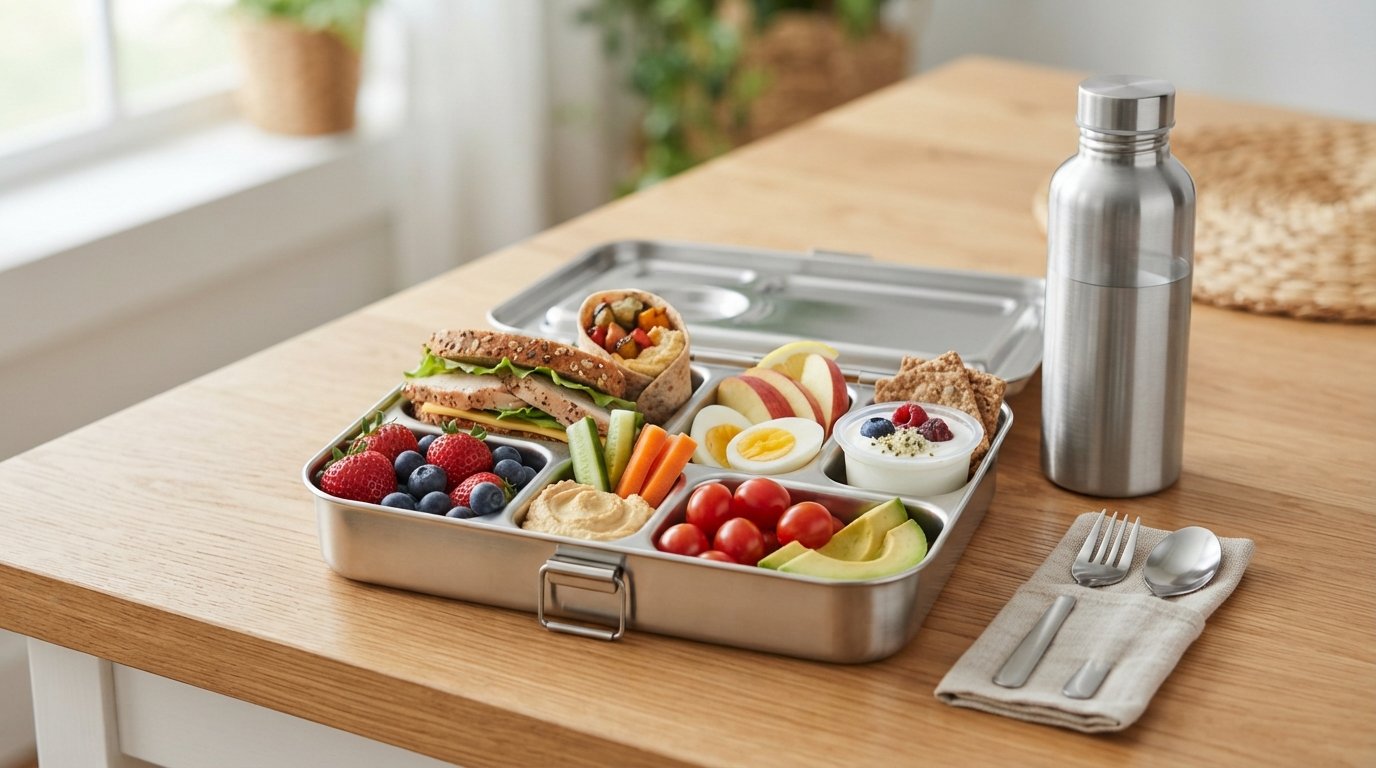
Preparing a healthy school lunch for children can be challenging when you are balancing nutrition, convenience, taste, and a busy family schedule. A good lunch should provide enough energy to support learning and physical activity while also including nutrients children need for healthy growth and development.
The best healthy school lunch ideas for kids do not have to be complicated. Simple combinations of whole grains, protein, fruits, vegetables, and dairy or suitable alternatives can create balanced meals that children are more likely to enjoy.
This guide provides practical lunch ideas that can be prepared at home and packed for school.
What Makes a Healthy School Lunch?
A nutritious school lunch should contain a variety of food groups rather than focusing on one particular ingredient. A simple lunch formula can include:
- Protein: Chicken, eggs, beans, lentils, tuna, cheese, yogurt, or hummus
- Whole grains: Whole-grain bread, tortillas, pasta, brown rice, or oats
- Fruits: Apples, bananas, berries, oranges, pears, or melon
- Vegetables: Carrots, cucumber, tomatoes, bell peppers, broccoli, or leafy greens
- Healthy fats: Avocado, nuts, seeds, or nut and seed butters when permitted by the school
- Dairy or alternatives: Milk, cheese, or unsweetened yogurt
Children have different nutritional needs depending on their age, growth, activity level, and individual circumstances. Portions should therefore be appropriate for the child rather than based on adult serving sizes.
1. Chicken and Cheese Whole-Grain Sandwich
A sandwich is one of the easiest school lunch options to prepare.
Ingredients
- 2 slices whole-grain bread
- Sliced cooked chicken
- 1 slice cheese
- Lettuce
- Cucumber slices
- Tomato
- Plain yogurt or hummus as a spread
Preparation
Spread a thin layer of yogurt or hummus over the bread.
Add chicken, cheese, lettuce, cucumber, and tomato. Close the sandwich and cut it into smaller pieces if that makes it easier for your child to eat.
Pack it with fruit and a small serving of vegetables.
Why It Works
The sandwich provides protein and carbohydrates while vegetables contribute fiber and micronutrients. Whole-grain bread can also provide more fiber than refined bread.
2. Homemade Chicken Wrap
Wraps are convenient for children who prefer handheld foods.
Ingredients
- 1 whole-grain tortilla
- Cooked chicken strips
- Lettuce
- Cucumber
- Grated carrot
- Cheese
- Plain yogurt
Preparation
Spread yogurt over the tortilla.
Add chicken, vegetables, and cheese.
Roll the tortilla tightly and cut it into smaller sections.
Lunchbox Pairing
Serve with apple slices, berries, or another fruit your child enjoys.
3. Mini Vegetable and Cheese Quesadillas
Quesadillas can be prepared quickly and customized according to a child’s preferences.
Ingredients
- 1 whole-grain tortilla
- Shredded cheese
- Finely chopped bell pepper
- Corn
- Cooked chicken, optional
Preparation
Place the tortilla in a heated pan.
Add cheese and vegetables over one half. Fold the tortilla and cook until the cheese melts.
Allow it to cool before cutting it into wedges.
Why It Works
The small pieces are easy to handle and can make vegetables more appealing to children.
4. Pasta Salad With Chicken and Vegetables
Cold pasta salad is a useful lunchbox option that can be prepared in advance.
Ingredients
- 1 cup cooked whole-grain pasta
- Cooked chicken
- Cucumber
- Cherry tomatoes
- Sweet corn
- Grated carrot
- Small amount of olive oil
- Lemon juice
Preparation
Allow the cooked pasta to cool.
Combine pasta, chicken, cucumber, tomatoes, corn, and carrot.
Add a small amount of olive oil and lemon juice. Mix well and refrigerate until ready to pack.
Why It Works
This meal combines carbohydrates, protein, and vegetables in one container. It is also easy to customize based on foods your child already accepts.
5. Egg and Avocado Sandwich
Eggs are a convenient source of protein and work well in school lunches.
Ingredients
- 2 slices whole-grain bread
- 1 hard-boiled egg
- 1/4 avocado
- Lettuce
- Tomato
- Black pepper
Preparation
Mash the avocado and spread it over the bread.
Slice the hard-boiled egg and place it on top.
Add lettuce and tomato, then close the sandwich.
Lunchbox Pairing
Add a piece of fruit and plain yogurt for a more complete lunch.
6. Hummus and Vegetable Pita
This vegetarian lunch is simple to prepare and easy to customize.
Ingredients
- 1 whole-grain pita
- 2 to 3 tablespoons hummus
- Cucumber
- Grated carrot
- Lettuce
- Tomato
- Optional cheese
Preparation
Spread hummus inside the pita.
Add the vegetables and cheese if desired.
Cut the pita into smaller pieces for younger children.
Why It Works
Hummus provides plant-based protein and fiber, while the vegetables add variety and important nutrients.
7. Homemade Chicken and Rice Bowl
A rice bowl can be prepared using leftovers from dinner.
Ingredients
- 1/2 to 1 cup cooked rice
- Cooked chicken
- Steamed broccoli
- Carrots
- Sweet corn
- Avocado
- Small amount of yogurt-based dressing
Preparation
Place rice in a lunch container.
Add chicken, broccoli, carrots, corn, and avocado.
Keep the dressing separate if necessary to prevent the meal from becoming soggy.
Time-Saving Tip
Prepare extra rice and chicken during dinner and save portions for the next day’s lunch.
8. Peanut Butter and Banana Whole-Grain Sandwich
If the school permits peanuts and there are no allergy concerns, this can be a simple lunch or snack option.
Ingredients
- 2 slices whole-grain bread
- Natural peanut butter
- 1 banana
Preparation
Spread peanut butter evenly over the bread.
Add banana slices and close the sandwich.
Important School Safety Note
Many schools have strict policies regarding peanuts and tree nuts because of food allergies. Always check the school’s rules before packing peanut butter. If nuts are not permitted, use an approved seed butter instead.
9. Turkey and Cheese Roll-Ups
Roll-ups are useful for children who prefer smaller portions and finger foods.
Ingredients
- Whole-grain tortilla
- Cooked turkey slices
- Cheese
- Lettuce
- Cucumber
Preparation
Place turkey, cheese, lettuce, and cucumber on the tortilla.
Roll tightly and cut into small pieces.
Pack with fruit and vegetables.
Why It Works
The roll-ups provide protein and carbohydrates in an easy-to-eat format.
10. Homemade Mini Pizza Lunch
A homemade pizza can be a more nutritious alternative to heavily processed pizza products.
Ingredients
- Whole-grain pita or flatbread
- Tomato sauce
- Mozzarella cheese
- Bell peppers
- Corn
- Cooked chicken, optional
Preparation
Spread tomato sauce over the pita.
Add cheese and selected toppings.
Bake until the cheese melts.
Allow it to cool before packing.
Cut into small pieces for easier eating.
11. Chickpea and Vegetable Wrap
This plant-based wrap provides a combination of fiber and plant protein.
Ingredients
- Whole-grain tortilla
- 1/2 cup mashed chickpeas
- Cucumber
- Grated carrot
- Lettuce
- Tomato
- Plain yogurt or hummus
Preparation
Mash the chickpeas lightly with a fork.
Spread them over the tortilla and add the vegetables.
Roll tightly and cut into sections.
Why It Works
Chickpeas can provide protein and dietary fiber while the vegetables increase the variety of plant foods in the meal.
12. Yogurt, Fruit, and Oat Lunch Box
A lunch does not always need to be a sandwich or wrap.
Ingredients
- Plain or lightly sweetened yogurt
- Fresh berries
- Banana slices
- Rolled oats or homemade granola
- Apple slices
- Cucumber sticks
Preparation
Place yogurt in a sealed container.
Pack fruit, oats, and vegetables separately to maintain their texture.
Why It Works
This lunch offers several different foods and textures, which can be useful for children who enjoy variety.
13. Tuna and Corn Sandwich
Tuna can be a convenient source of protein for school lunches.
Ingredients
- Whole-grain bread
- Canned tuna
- Corn
- Plain yogurt
- Lettuce
- Cucumber
Preparation
Drain the tuna thoroughly.
Mix it with a small amount of plain yogurt and corn.
Place the mixture between slices of whole-grain bread and add lettuce and cucumber.
Keep the sandwich properly chilled until lunchtime.
14. Homemade Oat and Banana Muffins
Homemade muffins can be included as part of a lunch when paired with protein and fresh produce.
Ingredients
- 2 ripe bananas
- 1 cup rolled oats
- 1 egg
- 1/2 teaspoon cinnamon
- 1/2 cup plain yogurt
- Small amount of chopped fruit
Preparation
Mash the bananas.
Mix all ingredients together.
Divide the mixture into muffin cups and bake until fully cooked.
Allow them to cool before packing.
Lunchbox Pairing
Serve a muffin with yogurt, cheese, fruit, and vegetables rather than treating the muffin as the entire meal.
15. Simple Bean and Cheese Burrito
A bean burrito can be a filling vegetarian school lunch.
Ingredients
- Whole-grain tortilla
- 1/2 cup cooked beans
- Shredded cheese
- Corn
- Tomato
- Avocado
Preparation
Place beans, cheese, corn, tomato, and avocado on the tortilla.
Fold the sides inward and roll tightly.
Cut into smaller portions if necessary.
Healthy School Lunchbox Ideas for Picky Eaters
Picky eating is common during childhood. The goal should not be to force children to eat foods they strongly dislike. Instead, offer variety while keeping familiar foods available.
Try these strategies:
Include One Familiar Food
If you are introducing a new vegetable, include a food your child already enjoys in the same lunch.
Keep Portions Small
Large portions of unfamiliar foods can feel overwhelming. Start with small amounts.
Offer Different Textures
Some children prefer crunchy foods, while others prefer soft foods. Try combinations such as cucumber sticks, yogurt, soft fruit, sandwiches, and crackers.
Make Food Visually Appealing
Cut sandwiches, fruits, and vegetables into manageable shapes or sections. Presentation can influence whether children are willing to try a food.
Avoid Turning Lunch Into a Battle
Children may need repeated exposure before accepting a new food. Keep offering variety without making every meal a confrontation.
How to Pack a Balanced School Lunch
A practical lunchbox can follow a simple structure:
Main food: Sandwich, wrap, pasta, rice bowl, quesadilla, or burrito.
Fruit: Apple, banana, berries, orange, pear, or melon.
Vegetable: Cucumber, carrots, bell peppers, tomatoes, or broccoli.
Protein or dairy: Yogurt, cheese, egg, beans, chicken, or hummus.
Drink: Water is generally a simple everyday choice.
You do not need to include every category in equal amounts at every meal. The overall diet across the day matters more than making one lunch perfectly balanced.
Food Safety for School Lunches
Nutrition is only half the job. Food safety matters when meals are packed several hours before they are eaten.
Foods such as cooked chicken, eggs, yogurt, cheese, and other perishable ingredients should be kept at safe temperatures. Use an insulated lunch bag with appropriate ice packs when necessary.
Other useful practices include:
- Wash fruits and vegetables before packing them.
- Keep raw and cooked foods separate during preparation.
- Use clean lunch containers.
- Do not leave perishable foods at room temperature for extended periods.
- Follow school guidelines for food storage.
- Check whether the school has restrictions on nuts or other common allergens.
How to Save Time When Preparing School Lunches
Prepare Ingredients the Night Before
Wash vegetables, cut fruit, cook eggs, and prepare sandwich ingredients in advance.
Use Dinner Leftovers
Grilled chicken, rice, pasta, roasted vegetables, and beans can often become the foundation of the next day’s lunch.
Create a Lunchbox Rotation
Choose five to eight reliable lunch combinations and rotate them throughout the school term.
Keep Convenient Foods Available
Frozen vegetables, canned beans, whole-grain bread, yogurt, eggs, and fresh fruit can make lunch preparation much easier.
Let Children Participate
Older children can help wash fruit, assemble sandwiches, choose vegetables, or pack their lunch under appropriate supervision. Giving children some control can also increase their interest in the meal.
A Simple Five-Day School Lunch Plan
Monday: Chicken and cheese whole-grain sandwich, cucumber sticks, berries, and yogurt.
Tuesday: Chicken and vegetable wrap, apple slices, and hummus.
Wednesday: Pasta salad with chicken and vegetables, banana, and cheese.
Thursday: Egg and avocado sandwich, carrot sticks, orange slices, and yogurt.
Friday: Bean and cheese burrito, cucumber, strawberries, and plain yogurt.
The exact foods can be adjusted according to your child’s preferences, dietary requirements, school policies, and available ingredients.
Final Thoughts
The best healthy school lunch ideas for kids are simple, balanced, practical, and appealing to the child eating them. You do not need expensive ingredients or complicated recipes to prepare nutritious school meals.
Sandwiches, wraps, pasta salads, rice bowls, quesadillas, burritos, yogurt bowls, and homemade snacks can all form part of a varied lunch rotation. Focus on including a combination of protein, whole grains, fruits, vegetables, and other nutrient-rich foods.
Most importantly, aim for consistency rather than perfection. Children’s appetites and preferences change, and some days they may eat more than others. Providing nutritious options regularly gives them opportunities to develop healthy eating habits while keeping school lunches manageable for the entire family.