

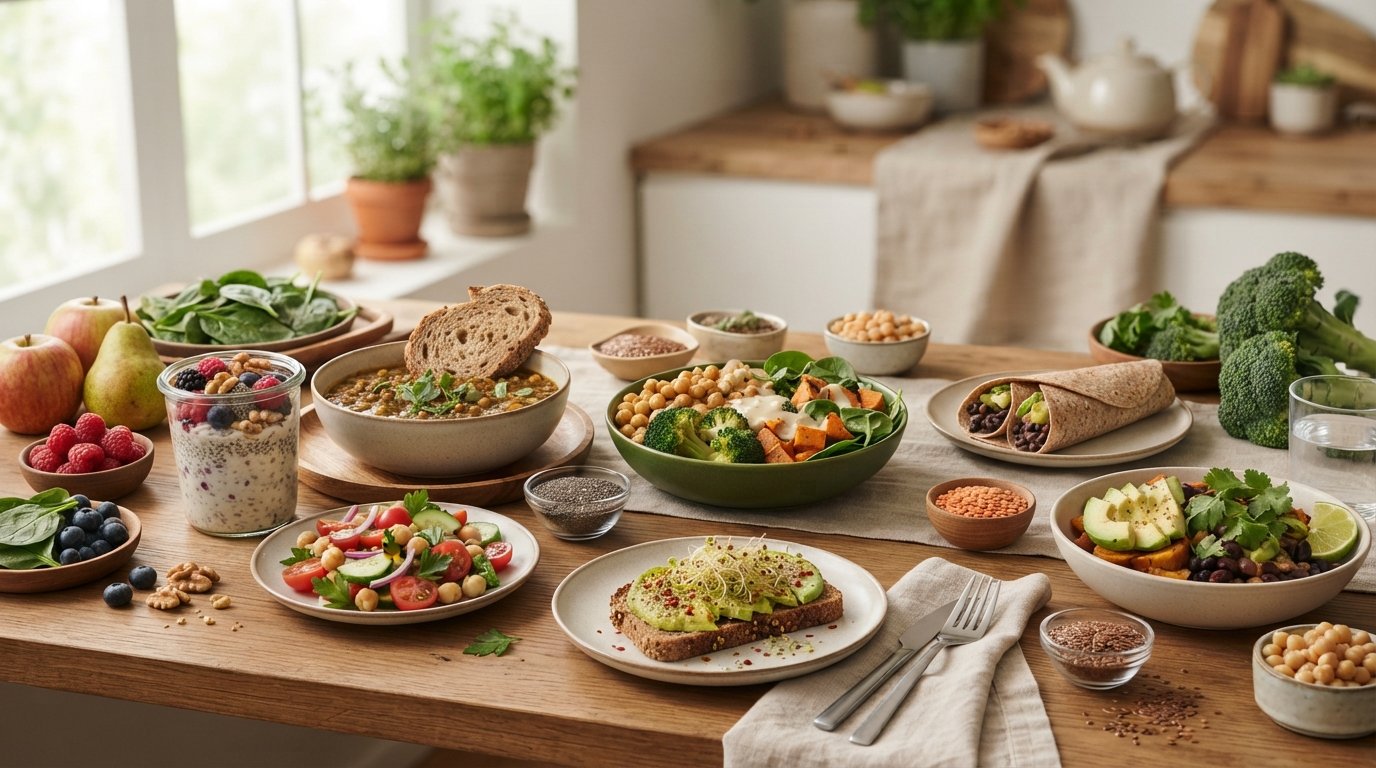
Good digestion starts with more than simply choosing foods that are easy to eat. The digestive system depends on adequate fiber, fluids, regular movement, and a varied diet to function properly. Fiber is particularly important because it supports regular bowel movements, contributes to a healthy gut environment, and can help meals feel more satisfying.
However, increasing fiber too quickly can cause bloating, gas, or abdominal discomfort. The better approach is to gradually include fiber-rich foods throughout the day while drinking enough fluids.
This guide features practical fiber-rich recipes for better digestion, including breakfasts, salads, soups, snacks, and complete meals that use ingredients such as oats, berries, lentils, chickpeas, vegetables, whole grains, chia seeds, and fruits.
Why Fiber Matters for Digestion
Dietary fiber is a type of carbohydrate that the body does not fully digest. It passes through the digestive system and has different effects depending on the type.
Soluble Fiber
Soluble fiber absorbs water and forms a gel-like substance in the digestive tract. It is found in foods such as oats, apples, beans, lentils, and some fruits and vegetables.
Insoluble Fiber
Insoluble fiber adds bulk to stool and can help food move through the digestive tract. Whole grains, vegetables, nuts, and seeds are useful sources.
A varied diet containing both types of fiber can support normal digestive function.
How Much Fiber Do You Need?
Fiber needs vary according to age, sex, and overall dietary requirements. For adults, a common general target is around 22 to 34 grams of fiber per day, depending on individual factors.
Rather than trying to reach your target in one meal, spread fiber-rich foods throughout breakfast, lunch, dinner, and snacks.
When increasing fiber intake, do it gradually. Your digestive system needs time to adapt.
1. Berry and Chia Overnight Oats
Overnight oats are an easy way to combine whole grains, fruit, and seeds in one breakfast.
Ingredients
- 1/2 cup rolled oats
- 1 tablespoon chia seeds
- 1/2 cup blueberries
- 1/2 banana, sliced
- 3/4 cup plain Greek yogurt
- 1/2 cup milk
- 1 tablespoon chopped walnuts
- Cinnamon
Preparation
Add oats, chia seeds, yogurt, and milk to a container. Stir thoroughly.
Add blueberries, banana, and cinnamon. Cover and refrigerate overnight.
Top with walnuts before serving.
Why It Works
Oats and chia seeds provide fiber, while berries and bananas add additional plant foods. Greek yogurt contributes protein, making this a balanced breakfast.
2. Lentil and Vegetable Soup
Lentils are an excellent ingredient for fiber-rich meals because they provide both fiber and plant protein.
Ingredients
- 1 cup cooked lentils
- 1 carrot, chopped
- 1 celery stalk, chopped
- 1/2 onion, diced
- 1 cup spinach
- 2 cups low-sodium vegetable broth
- 1 teaspoon olive oil
- 2 garlic cloves
- 1/2 teaspoon cumin
- Black pepper
Preparation
Heat olive oil in a pot and sauté onion, carrot, celery, and garlic.
Add lentils, broth, cumin, and black pepper. Simmer until the vegetables become tender.
Add spinach during the final few minutes of cooking.
Serve warm.
Why It Works
Lentils provide substantial dietary fiber and can make soup more filling. Vegetables add additional fiber and nutrients.
3. Chickpea and Cucumber Salad
This simple salad works well as a light lunch or side dish.
Ingredients
- 1 cup cooked chickpeas
- 1 cucumber, chopped
- 1 cup cherry tomatoes
- 1/4 red onion
- 1 tablespoon chopped parsley
- 1 tablespoon lemon juice
- 1 teaspoon olive oil
- Black pepper
Preparation
Combine chickpeas, cucumber, tomatoes, onion, and parsley in a bowl.
Add lemon juice and olive oil. Season with black pepper and toss well.
Serve immediately or refrigerate before serving.
Why It Works
Chickpeas provide fiber and plant protein, while vegetables contribute additional fiber and water.
4. Apple Cinnamon Oatmeal
A warm bowl of oatmeal can be a simple and affordable fiber-rich breakfast.
Ingredients
- 1/2 cup rolled oats
- 1 cup milk or unsweetened plant-based milk
- 1 small apple, diced
- 1 tablespoon ground flaxseed
- 1 tablespoon chopped walnuts
- 1/2 teaspoon cinnamon
Preparation
Cook oats with milk according to the package instructions.
Add diced apple and cinnamon during the final few minutes of cooking.
Transfer to a bowl and top with flaxseed and walnuts.
Why It Works
Oats, apples, flaxseed, and walnuts provide a combination of fiber and other nutrients. The apple also adds natural sweetness, reducing the need for added sugar.
5. Quinoa and Roasted Vegetable Bowl
Whole grains and vegetables can form the foundation of a satisfying fiber-rich lunch or dinner.
Ingredients
- 1/2 cup cooked quinoa
- 1 cup broccoli
- 1/2 cup bell pepper
- 1/2 cup zucchini
- 1/2 cup chickpeas
- 1 teaspoon olive oil
- Lemon juice
- Fresh herbs
- Black pepper
Preparation
Roast the vegetables with olive oil until tender.
Place cooked quinoa in a bowl and add the roasted vegetables and chickpeas.
Finish with lemon juice, fresh herbs, and black pepper.
Why It Works
Quinoa, chickpeas, and vegetables create a combination of fiber, plant protein, and whole-food carbohydrates.
6. High-Fiber Berry Smoothie
A smoothie can be an easy option when you want to include several plant foods in one meal.
Ingredients
- 1/2 cup blueberries
- 1/2 cup strawberries
- 1/2 banana
- 1 tablespoon chia seeds
- 1 tablespoon ground flaxseed
- 1/2 cup plain Greek yogurt
- 1 cup unsweetened milk
- Ice as needed
Preparation
Place all ingredients in a blender.
Blend until smooth. Add additional liquid if needed.
Serve immediately.
Why It Works
Berries, banana, chia seeds, and flaxseed contribute fiber, while Greek yogurt provides protein.
For better digestion, eat whole fruits regularly as well. Blending fruit does not make a smoothie automatically superior to eating whole fruit.
7. Black Bean and Avocado Wrap
This quick wrap can work as a filling lunch or light dinner.
Ingredients
- 1 whole-grain tortilla
- 1/2 cup black beans
- 1/4 avocado
- 1/2 cup lettuce
- 1/2 cup diced tomatoes
- 1/4 cup corn
- Lime juice
- Fresh cilantro
Preparation
Spread the black beans across the tortilla.
Add avocado, lettuce, tomatoes, corn, and cilantro.
Drizzle with lime juice and roll tightly.
Why It Works
Black beans provide fiber and plant protein, while avocado, vegetables, and whole grains add further nutrients.
8. Pear and Walnut Yogurt Bowl
This simple snack requires almost no cooking.
Ingredients
- 1 ripe pear
- 3/4 cup plain Greek yogurt
- 1 tablespoon walnuts
- 1 tablespoon ground flaxseed
- Cinnamon
Preparation
Slice the pear.
Add yogurt to a bowl and top with pear slices, walnuts, flaxseed, and cinnamon.
Why It Works
Pears provide fiber, while flaxseed and walnuts add fiber and healthy fats. Greek yogurt adds protein.
9. Sweet Potato and Black Bean Bowl
Sweet potatoes and beans make a nutritious combination for a vegetarian dinner.
Ingredients
- 1 medium sweet potato
- 1/2 cup black beans
- 1 cup spinach
- 1/4 avocado
- 1/2 cup chopped tomatoes
- 1 teaspoon olive oil
- Lime juice
- Cumin
- Black pepper
Preparation
Bake or microwave the sweet potato until tender.
Split it open and add black beans, spinach, tomatoes, and avocado.
Season with cumin, black pepper, and lime juice.
Why It Works
Sweet potatoes and black beans provide fiber while also contributing carbohydrates that can support energy needs.
10. Mediterranean White Bean Salad
This refreshing salad is suitable for lunch, meal preparation, or a side dish.
Ingredients
- 1 cup cooked white beans
- 1 cup chopped cucumber
- 1 cup tomatoes
- 1/4 red onion
- Fresh parsley
- 1 teaspoon olive oil
- Lemon juice
- Black pepper
Preparation
Combine the beans, cucumber, tomatoes, onion, and parsley.
Add olive oil and lemon juice.
Season with black pepper and toss thoroughly.
Why It Works
White beans are rich in fiber, while the vegetables add volume, water, and additional plant nutrients.
11. High-Fiber Vegetable and Bean Soup
A vegetable soup can be an easy way to increase your intake of different plant foods.
Ingredients
- 1/2 cup kidney beans
- 1/2 cup chickpeas
- 1 carrot
- 1 zucchini
- 1 celery stalk
- 1 cup chopped tomatoes
- 2 cups low-sodium vegetable broth
- 1 teaspoon olive oil
- Garlic
- Italian herbs
- Black pepper
Preparation
Heat olive oil in a large pot.
Add garlic, carrot, zucchini, and celery. Cook for several minutes.
Add beans, chickpeas, tomatoes, broth, and herbs.
Simmer until the vegetables are tender.
Why It Works
Combining several types of vegetables and legumes increases the variety of fiber sources in the meal.
12. Whole-Grain Toast With Avocado and Chia Seeds
This simple meal is suitable for breakfast or a quick snack.
Ingredients
- 1 to 2 slices whole-grain bread
- 1/2 avocado
- 1 teaspoon chia seeds
- Tomato slices
- Lemon juice
- Black pepper
Preparation
Toast the bread.
Mash the avocado with lemon juice and spread it over the toast.
Add tomato slices and sprinkle with chia seeds and black pepper.
Why It Works
Whole-grain bread, avocado, chia seeds, and tomatoes provide a combination of fiber and other nutrients.
Best Fiber-Rich Foods to Include in Your Diet
If your goal is to improve your daily fiber intake, focus on variety rather than one particular food.
Useful options include:
- Oats
- Barley
- Brown rice
- Quinoa
- Whole-grain bread
- Lentils
- Chickpeas
- Black beans
- Kidney beans
- Apples
- Pears
- Berries
- Bananas
- Sweet potatoes
- Broccoli
- Carrots
- Spinach
- Avocado
- Chia seeds
- Flaxseeds
- Almonds
- Walnuts
Eating a range of these foods helps you obtain different types of fiber and other nutrients.
How to Increase Fiber Without Digestive Discomfort
Increasing fiber too quickly is a common mistake. If your current diet is relatively low in fiber, suddenly adding large quantities of beans, seeds, whole grains, and vegetables can cause gas and bloating.
Instead, make gradual changes.
Increase Fiber Slowly
Add one additional fiber-rich food to your meals at a time. Allow your digestive system to adjust before making another major increase.
Drink Enough Fluids
Fiber works alongside adequate fluid intake. Drinking water regularly can support normal digestion and help prevent constipation.
Eat a Variety of Plant Foods
Do not rely exclusively on supplements or one high-fiber ingredient. Include fruits, vegetables, legumes, whole grains, nuts, and seeds.
Pay Attention to Your Body
Some people are more sensitive to particular foods. If a specific ingredient consistently causes discomfort, consider reducing the portion and discussing persistent symptoms with a healthcare professional.
Common Mistakes When Increasing Fiber
Adding Too Much Fiber at Once
More is not automatically better. A gradual increase is generally easier for the digestive system to tolerate.
Forgetting About Fluids
A significant increase in fiber without adequate fluid intake can make digestive discomfort worse.
Depending on Fiber Supplements
Supplements can have a role in specific situations, but whole foods provide fiber alongside vitamins, minerals, and other beneficial nutrients.
Eating Only One Type of Fiber
A varied diet is preferable to relying heavily on one food or supplement.
Ignoring Persistent Digestive Symptoms
Fiber can support normal digestion, but it is not a universal treatment for digestive disorders. Persistent pain, unexplained weight loss, blood in the stool, prolonged diarrhea, or ongoing constipation should be evaluated by a qualified healthcare professional.
Simple Ways to Add More Fiber to Everyday Meals
You do not need to completely change your diet to increase fiber.
Try these practical changes:
- Add berries or chia seeds to breakfast.
- Choose oatmeal instead of a refined breakfast cereal.
- Add beans or lentils to soups and salads.
- Choose whole-grain bread instead of refined bread.
- Add vegetables to pasta, rice, and egg dishes.
- Keep fruit available for snacks.
- Add ground flaxseed to yogurt or oatmeal.
- Replace some meat in meals with beans or lentils.
- Include a vegetable with lunch and dinner.
- Keep nuts and seeds available for small snacks.
Sample One-Day High-Fiber Meal Plan
A simple day could include:
Breakfast: Apple cinnamon oatmeal topped with walnuts and ground flaxseed.
Lunch: Chickpea and cucumber salad with whole-grain bread.
Snack: Pear with plain Greek yogurt and chia seeds.
Dinner: Sweet potato and black bean bowl with spinach and avocado.
Optional snack: Fresh berries with plain yogurt.
The exact portions should be adjusted according to your individual nutritional needs and overall diet.
Final Thoughts
The best fiber-rich recipes for better digestion are based on simple, whole-food ingredients rather than complicated diet rules. Oats, beans, lentils, fruits, vegetables, whole grains, nuts, and seeds can all contribute to a more fiber-rich eating pattern.
Start gradually if your current fiber intake is low, drink adequate fluids, and aim for variety. Meals such as lentil soup, chickpea salad, berry oatmeal, quinoa bowls, and black bean wraps make it easier to include fiber throughout the day.
Remember that fiber is only one part of digestive health. Regular physical activity, adequate hydration, sufficient sleep, and an overall balanced diet also matter. If you experience persistent or severe digestive symptoms, do not assume that changing your fiber intake will solve the problem. Seek appropriate medical advice.