

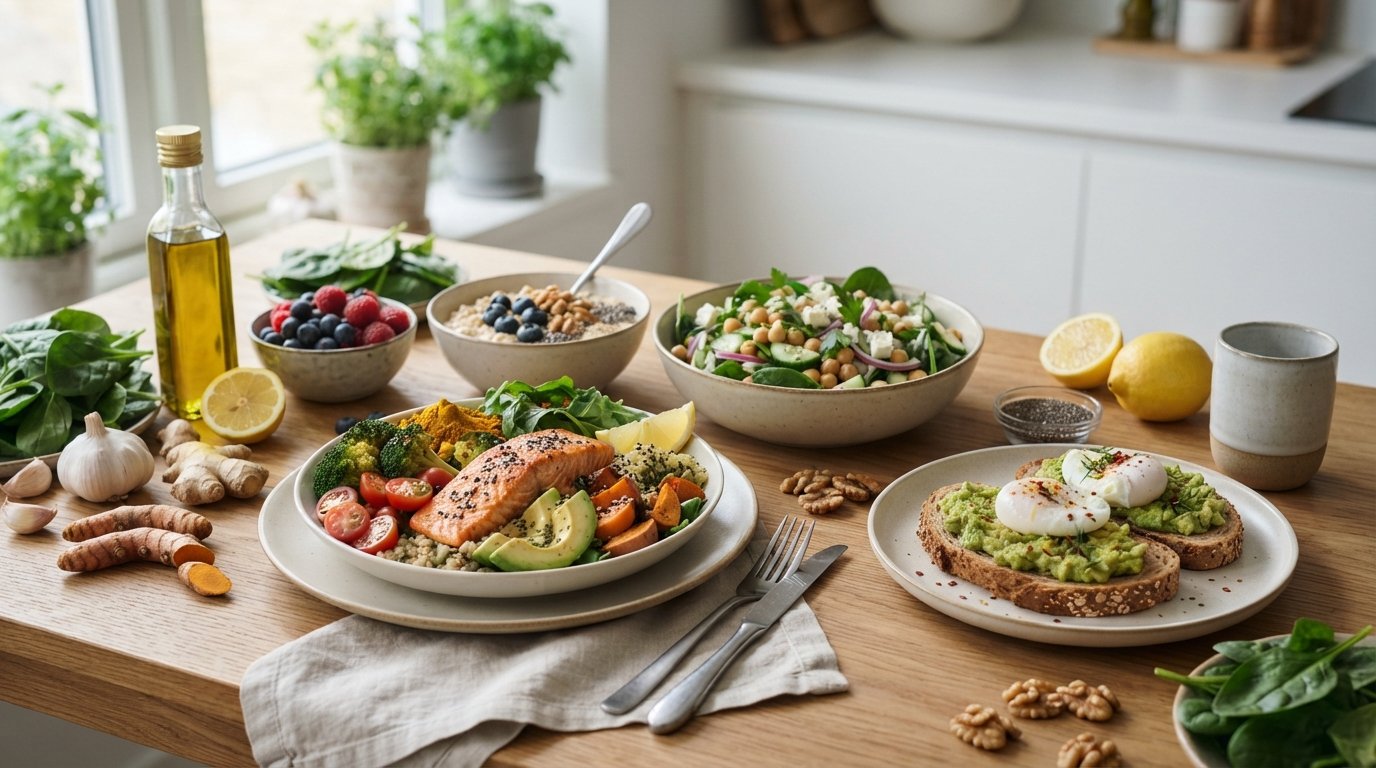
Inflammation is a normal biological response that helps the body respond to injury and infection. However, persistent inflammation can be influenced by lifestyle factors, including diet. Rather than relying on a single “anti-inflammatory” food, a healthier approach is to build meals around vegetables, fruits, whole grains, legumes, fish, nuts, seeds, and other minimally processed foods.
This article shares practical anti-inflammatory recipes for everyday health that are simple enough for regular meals. The recipes emphasize nutrient-dense ingredients such as leafy greens, berries, olive oil, beans, salmon, oats, turmeric, ginger, and colorful vegetables.
What Is an Anti-Inflammatory Diet?
An anti-inflammatory eating pattern is not a strict diet with a fixed list of foods. It generally emphasizes foods that provide fiber, healthy fats, vitamins, minerals, and plant compounds while reducing excessive consumption of highly processed foods, added sugars, and unhealthy fats.
Mediterranean-style eating patterns are often associated with lower levels of inflammatory markers and emphasize vegetables, fruits, whole grains, legumes, nuts, seeds, olive oil, and seafood.
The goal is not to eliminate inflammation completely. Normal inflammation is essential for healing and immune function. The focus is on supporting an overall dietary pattern that promotes good health.
Key Ingredients for Anti-Inflammatory Recipes
Before getting into the recipes, it helps to understand which ingredients can make everyday meals more nutrient-dense.
Berries
Blueberries, strawberries, raspberries, and blackberries provide fiber and polyphenols. They can easily be added to breakfast bowls, smoothies, or snacks.
Leafy Greens
Spinach, kale, arugula, and other leafy greens provide vitamins, minerals, fiber, and various plant compounds.
Fatty Fish
Salmon, sardines, mackerel, and other oily fish provide omega-3 fatty acids. Seafood can be an important part of a balanced diet.
Extra-Virgin Olive Oil
Olive oil is a primary source of fat in Mediterranean-style eating patterns and can be used for salad dressings, roasting, or moderate-heat cooking.
Nuts and Seeds
Walnuts, almonds, chia seeds, and flaxseeds provide healthy fats, fiber, and other nutrients.
Legumes
Lentils, chickpeas, black beans, and other legumes provide plant protein and fiber, making them useful ingredients for satisfying meals.
Ginger and Turmeric
These spices can add flavor without relying heavily on salt or processed sauces. They are commonly included in meals inspired by traditional dietary patterns.
1. Berry and Chia Breakfast Bowl
This simple breakfast combines berries, yogurt, chia seeds, and nuts for a nutrient-dense start to the day.
Ingredients
- 1 cup plain Greek yogurt
- 1/2 cup mixed berries
- 1 tablespoon chia seeds
- 1 tablespoon chopped walnuts
- 1 teaspoon ground flaxseed
- Cinnamon to taste
Preparation
Add Greek yogurt to a bowl. Top with berries, chia seeds, walnuts, and ground flaxseed.
Sprinkle with cinnamon and serve immediately.
Why It Works
Berries provide fiber and plant compounds, while chia seeds, flaxseed, and walnuts contribute healthy fats. Greek yogurt adds protein, making the breakfast more filling.
For lower added sugar, choose plain yogurt rather than flavored varieties.
2. Salmon and Roasted Vegetable Bowl
Salmon is a convenient way to include seafood in your diet while creating a satisfying meal.
Ingredients
- 4 to 5 ounces salmon
- 1 cup broccoli
- 1/2 cup bell peppers
- 1/2 cup zucchini
- 1/2 cup cooked quinoa
- 1 teaspoon extra-virgin olive oil
- Lemon juice
- Garlic
- Black pepper
Preparation
Season the salmon with garlic, lemon juice, and black pepper.
Place the salmon and vegetables on a baking tray. Lightly coat the vegetables with olive oil and roast until the vegetables are tender and the salmon is fully cooked.
Serve with cooked quinoa.
Why It Works
The meal combines protein, vegetables, whole-food carbohydrates, and healthy fats. Salmon also provides omega-3 fatty acids, which are an important component of a balanced diet.
3. Turmeric Chicken and Vegetable Rice Bowl
Turmeric and other spices can transform a simple chicken bowl into a flavorful meal without requiring heavy sauces.
Ingredients
- 4 ounces skinless chicken breast
- 1/2 cup cooked brown rice
- 1 cup mixed vegetables
- 1 teaspoon olive oil
- 1/2 teaspoon turmeric
- 1/4 teaspoon ground ginger
- Garlic
- Black pepper
Preparation
Season the chicken with turmeric, ginger, garlic, and black pepper.
Cook the chicken thoroughly in a pan with a small amount of olive oil. Prepare the vegetables separately until tender.
Serve the chicken and vegetables over brown rice.
Why It Works
This recipe combines lean protein, vegetables, whole grains, and flavorful spices. It is a practical option for lunch or dinner when you want a balanced meal without complicated preparation.
4. Spinach and Chickpea Salad
A chickpea salad can provide plant protein and fiber while requiring very little cooking.
Ingredients
- 1 cup cooked chickpeas
- 2 cups fresh spinach
- 1/2 cup cucumber
- 1/2 cup cherry tomatoes
- 1/4 avocado
- 1 tablespoon chopped walnuts
- Lemon juice
- 1 teaspoon extra-virgin olive oil
- Black pepper
Preparation
Combine spinach, chickpeas, cucumber, tomatoes, avocado, and walnuts in a large bowl.
Add lemon juice and olive oil. Season with black pepper and toss gently.
Why It Works
Chickpeas provide fiber and plant protein, while vegetables contribute additional nutrients. Walnuts and olive oil add healthy fats.
This is particularly useful as a quick lunch or side dish.
5. Anti-Inflammatory Oatmeal With Berries
Oatmeal can become a nutrient-dense breakfast when paired with fruit, seeds, and nuts.
Ingredients
- 1/2 cup rolled oats
- 1 cup milk or unsweetened plant-based milk
- 1/2 cup blueberries
- 1 tablespoon chia seeds
- 1 tablespoon chopped walnuts
- 1/2 teaspoon cinnamon
- 1/4 teaspoon ground turmeric
- Optional small amount of honey
Preparation
Cook the oats with milk according to the package instructions.
Transfer to a bowl and add blueberries, chia seeds, walnuts, cinnamon, and turmeric.
Mix gently and serve warm.
Why It Works
Oats provide soluble fiber, while berries, nuts, and seeds increase the nutritional value of the meal. Cinnamon and turmeric add flavor without requiring large amounts of sugar.
6. Lentil and Vegetable Soup
Lentil soup is an inexpensive and filling option for lunch or dinner.
Ingredients
- 1 cup cooked lentils
- 1 carrot, chopped
- 1 celery stalk, chopped
- 1/2 onion, chopped
- 1 cup spinach
- 2 cups low-sodium vegetable broth
- 1 teaspoon olive oil
- Garlic
- Turmeric
- Black pepper
Preparation
Heat olive oil in a pot and sauté the onion, carrot, celery, and garlic.
Add lentils, broth, turmeric, and black pepper. Simmer until the vegetables become tender.
Add spinach during the final few minutes of cooking.
Why It Works
Lentils are rich in fiber and plant protein, making this soup satisfying without requiring meat. The vegetables increase the variety of nutrients and add texture.
7. Mediterranean Tuna and Bean Salad
This quick salad is suitable for lunch when you want something filling without extensive cooking.
Ingredients
- 1 can tuna packed in water
- 1/2 cup white beans
- 1 cup chopped tomatoes
- 1/2 cup cucumber
- 1/4 cup red onion
- Fresh parsley
- 1 teaspoon extra-virgin olive oil
- Lemon juice
- Black pepper
Preparation
Drain the tuna and beans.
Combine all ingredients in a bowl. Add olive oil, lemon juice, and black pepper. Toss well before serving.
Why It Works
Tuna and beans provide protein, while vegetables contribute fiber and micronutrients. Olive oil and lemon create a simple dressing without the need for highly processed sauces.
8. Green Anti-Inflammatory Smoothie
Smoothies can be an easy way to incorporate fruits and vegetables into a busy day.
Ingredients
- 1 cup spinach
- 1/2 cup blueberries
- 1/2 banana
- 1 tablespoon chia seeds
- 1/2 teaspoon grated fresh ginger
- 1 cup unsweetened milk
- Ice as needed
Preparation
Add all ingredients to a blender and blend until smooth.
Add more liquid if necessary to achieve your preferred consistency.
Why It Works
The smoothie combines leafy greens, berries, seeds, and ginger. Using unsweetened milk helps prevent unnecessary added sugar.
For a more substantial meal, add plain Greek yogurt or another protein-rich ingredient.
9. Garlic Shrimp and Vegetable Stir-Fry
Shrimp cooks quickly, making this recipe useful for busy evenings.
Ingredients
- 4 to 5 ounces shrimp
- 1 cup broccoli
- 1/2 cup bell peppers
- 1/2 cup mushrooms
- 1 teaspoon olive oil
- 2 garlic cloves
- Fresh ginger
- Low-sodium soy sauce
- Black pepper
Preparation
Heat olive oil in a pan and sauté garlic and ginger.
Add shrimp and cook until completely cooked. Add the vegetables and stir-fry until tender but still slightly crisp.
Add a small amount of low-sodium soy sauce and black pepper.
Serve with brown rice or quinoa if desired.
Why It Works
This recipe provides seafood, vegetables, and a moderate amount of healthy fat. Keeping the sauce and oil controlled helps maintain a balanced meal.
10. Avocado and Egg Whole-Grain Toast
This recipe works well for breakfast or a light lunch.
Ingredients
- 1 to 2 slices whole-grain bread
- 2 eggs
- 1/2 avocado
- Fresh spinach
- Tomato slices
- Black pepper
- Lemon juice
Preparation
Toast the bread.
Cook the eggs according to your preference while ensuring they are safely cooked. Mash the avocado with a little lemon juice.
Spread avocado over the toast and top with spinach, tomato, and eggs. Finish with black pepper.
Why It Works
Eggs provide protein, while avocado contributes unsaturated fat. Whole-grain bread and vegetables add fiber and other nutrients.
11. Walnut and Apple Snack Bowl
Healthy snacks do not need to be complicated.
Ingredients
- 1 medium apple
- 1 tablespoon walnuts
- 1/2 cup plain Greek yogurt
- Cinnamon
Preparation
Slice the apple and serve it with Greek yogurt and walnuts. Add cinnamon for additional flavor.
Why It Works
This combination provides protein, fiber, healthy fats, and naturally occurring carbohydrates. It can be useful when you need a snack between meals.
12. Quinoa and Roasted Vegetable Bowl
A plant-based grain bowl can be prepared in advance and used for several meals.
Ingredients
- 1/2 cup cooked quinoa
- 1 cup roasted vegetables
- 1/2 cup chickpeas
- 1/4 avocado
- Fresh spinach
- Lemon juice
- 1 teaspoon olive oil
Preparation
Place quinoa in a bowl and add roasted vegetables, chickpeas, spinach, and avocado.
Drizzle with olive oil and lemon juice before serving.
Why It Works
Quinoa and chickpeas provide plant-based protein and fiber, while vegetables add color and nutritional variety.
Foods to Limit for a Healthier Anti-Inflammatory Eating Pattern
Eating more nutrient-dense foods is only one part of the equation. It is also useful to reduce your reliance on foods that are high in added sugars, sodium, and unhealthy fats.
Try to limit:
- Sugary drinks
- Highly processed snacks
- Excessively refined carbohydrates
- Processed meats
- Deep-fried foods
- Foods high in added sugars
- Excessive alcohol
- Highly processed convenience foods
This does not mean you need to eliminate every treat. Sustainable nutrition is about the overall pattern of your diet rather than achieving perfection at every meal.
How to Build an Anti-Inflammatory Meal
A simple formula can make meal planning easier:
1. Choose a protein source:
Salmon, chicken, eggs, beans, lentils, tofu, Greek yogurt, or seafood.
2. Add colorful vegetables:
Spinach, broccoli, peppers, tomatoes, carrots, zucchini, or other vegetables.
3. Include a fiber-rich carbohydrate:
Oats, quinoa, brown rice, beans, lentils, or whole-grain bread.
4. Add a source of healthy fat:
Olive oil, avocado, walnuts, almonds, chia seeds, or flaxseed.
5. Use herbs and spices for flavor:
Garlic, ginger, turmeric, cinnamon, parsley, and other herbs can make meals more interesting without relying heavily on salt or sugar.
Tips for Making Anti-Inflammatory Eating Easier
Prepare Ingredients in Advance
Cook a batch of quinoa, brown rice, lentils, or chicken at the beginning of the week. Having prepared ingredients makes healthy meals much easier to assemble.
Keep Frozen Fruits and Vegetables Available
Frozen berries, spinach, broccoli, and other vegetables can be convenient alternatives when fresh produce is unavailable.
Make Simple Homemade Dressings
A mixture of olive oil, lemon juice, herbs, and black pepper can replace many commercial dressings that contain large amounts of sodium or added sugar.
Focus on Variety
Do not eat the same “healthy” foods every day. Rotate fruits, vegetables, legumes, whole grains, seafood, nuts, and seeds to create a more diverse diet.
Read Food Labels
Look beyond claims such as “natural” or “healthy.” Check the nutrition facts panel for added sugars, sodium, saturated fat, fiber, and serving size.
Sample Anti-Inflammatory Meal Plan
A simple day of meals could include:
Breakfast: Oatmeal with blueberries, chia seeds, walnuts, and cinnamon.
Lunch: Mediterranean tuna and bean salad with whole-grain bread.
Snack: Apple with Greek yogurt and walnuts.
Dinner: Salmon with roasted vegetables and quinoa.
Optional evening snack: Plain Greek yogurt with berries.
Portion sizes should be adjusted according to individual energy needs, activity level, and health goals.
Final Thoughts
The best anti-inflammatory recipes for everyday health are not based on one magical ingredient. They are built around a consistent pattern of eating that includes vegetables, fruits, whole grains, legumes, seafood, nuts, seeds, and healthy fats.
Recipes such as salmon and roasted vegetables, lentil soup, berry yogurt bowls, chickpea salads, and quinoa bowls can make nutrient-dense eating practical without requiring complicated cooking techniques.
The key is consistency. One meal will not transform your health, just as one indulgent meal will not undo it. Focus on the quality of your overall diet, stay physically active, get adequate sleep, and make sustainable choices that you can maintain over time.
If you have a diagnosed inflammatory condition or another medical condition, food should not be used as a replacement for prescribed medical treatment. A registered dietitian or qualified healthcare professional can help you develop an eating pattern appropriate for your individual needs.