

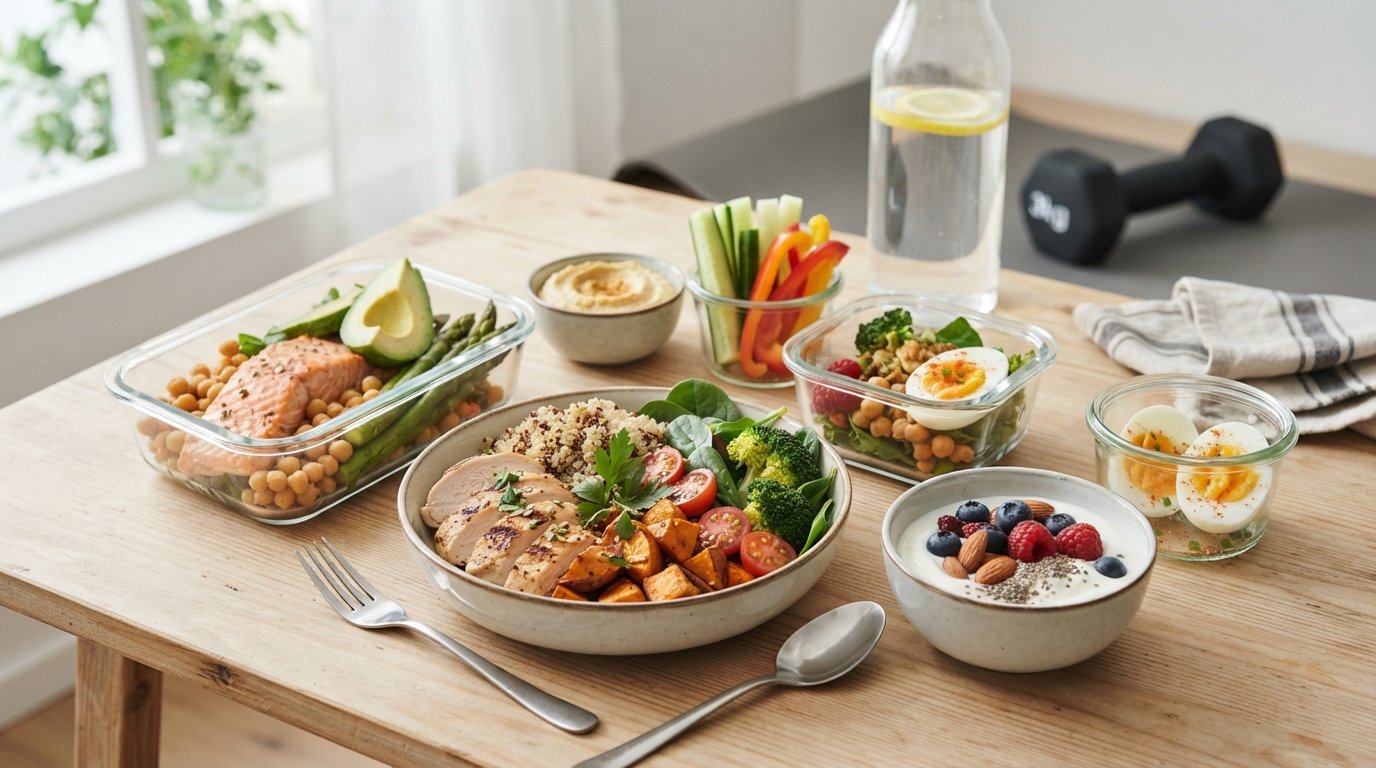
Losing body fat while maintaining or building muscle requires more than simply eating less. The quality and composition of your meals matter. Protein is particularly important because it supports muscle repair and growth while helping you feel satisfied after eating. When combined with an appropriate calorie intake and regular resistance training, a protein-rich diet can support both weight management and improvements in body composition.
The current Dietary Guidelines for Americans emphasize whole, nutrient-dense foods and a variety of protein sources, including seafood, lean meats, eggs, beans, peas, soy foods, nuts, and seeds.
This guide covers practical high-protein recipes for weight loss and muscle gain that can fit into breakfast, lunch, dinner, and snack routines without making healthy eating unnecessarily complicated.
Why Protein Matters for Weight Loss and Muscle Gain
Protein has several roles in a balanced diet. It provides amino acids required for tissue repair and helps maintain lean body mass. Research also suggests that increasing protein intake can provide additional gains in lean body mass when combined with resistance exercise.
Protein can also make meals more filling, which may make it easier to manage overall food intake. However, protein alone does not cause weight loss. A sustainable calorie deficit is still necessary for reducing body fat.
For muscle gain, nutrition works alongside training. Eating adequate protein without progressive resistance exercise is unlikely to produce significant muscle growth.
How Much Protein Do You Need?
Protein requirements vary according to body size, age, activity level, health status, and fitness goals. The current U.S. Dietary Guidelines provide a general target of approximately 1.2 to 1.6 grams of protein per kilogram of body weight per day, although individual requirements can differ.
For someone who regularly performs resistance training, the higher end of a protein range may be useful. Research examining protein intake alongside resistance training has found benefits for lean body mass, although more protein is not automatically better.
Instead of trying to consume most of your protein in one meal, build several meals around a meaningful protein source throughout the day.
1. Greek Yogurt and Berry Protein Bowl
This simple breakfast combines Greek yogurt with fruit and nutrient-dense toppings.
Ingredients
- 1 cup plain Greek yogurt
- 1/2 cup berries
- 1 tablespoon chia seeds
- 1 tablespoon chopped almonds
- 1 tablespoon natural peanut butter
- Cinnamon to taste
Preparation
Add Greek yogurt to a bowl and top with berries, chia seeds, almonds, and peanut butter. Sprinkle with cinnamon and serve immediately.
Why It Works
Greek yogurt provides a convenient source of protein, while berries provide fiber and micronutrients. Nuts and seeds add healthy fats, making the meal more satisfying.
For weight management, choose plain yogurt and limit added sweeteners.
2. High-Protein Egg and Vegetable Scramble
Eggs are an easy way to build a protein-rich breakfast while adding vegetables for additional nutrients.
Ingredients
- 2 whole eggs
- 2 egg whites
- 1 cup spinach
- 1/2 cup chopped bell pepper
- 1/4 cup chopped onion
- 1 teaspoon olive oil
- Black pepper and herbs to taste
Preparation
Heat olive oil in a nonstick pan. Add onion and bell pepper and cook until slightly softened. Add spinach and cook until wilted.
Whisk the eggs and egg whites together, then add them to the pan. Stir gently until cooked through.
Why It Works
The combination of whole eggs and egg whites increases protein while keeping the meal relatively simple. Vegetables add volume and nutrients without contributing many calories.
3. Grilled Chicken and Quinoa Bowl
A chicken and quinoa bowl is a practical option for lunch or dinner because it combines lean protein, whole grains, and vegetables.
Ingredients
- 4 ounces grilled skinless chicken breast
- 1/2 cup cooked quinoa
- 1 cup mixed vegetables
- 1/4 avocado
- Lemon juice
- Fresh herbs
- Black pepper
Preparation
Season and grill the chicken until fully cooked. Slice it into strips.
Place cooked quinoa in a bowl and add the vegetables and chicken. Top with avocado, lemon juice, herbs, and black pepper.
Why It Works
Chicken provides concentrated protein, while quinoa contributes carbohydrates and additional protein. Vegetables increase the meal’s fiber and nutrient content.
The current dietary guidance recommends choosing lean protein sources and incorporating vegetables, fruits, whole grains, and other minimally processed foods into an overall healthy eating pattern.
4. Tuna and Chickpea Salad
This recipe is particularly useful when you need a quick lunch without extensive cooking.
Ingredients
- 1 can tuna, preferably packed in water
- 1/2 cup cooked chickpeas
- 1 cup chopped cucumber
- 1/2 cup tomatoes
- 1 tablespoon chopped parsley
- Lemon juice
- 1 teaspoon olive oil
- Black pepper
Preparation
Drain the tuna and chickpeas. Combine them with cucumber, tomatoes, and parsley.
Add lemon juice, olive oil, and black pepper. Mix thoroughly and serve chilled.
Why It Works
Tuna provides protein while chickpeas contribute protein and fiber. The combination can create a filling meal without relying heavily on refined carbohydrates.
5. Chicken and Vegetable Stir-Fry
A stir-fry can be a balanced high-protein dinner when you control the amount of oil and sauce.
Ingredients
- 4 ounces chicken breast
- 1 cup broccoli
- 1/2 cup bell peppers
- 1/2 cup mushrooms
- 1/2 cup carrots
- 1 teaspoon olive oil
- Low-sodium soy sauce
- Garlic and ginger
Preparation
Cut the chicken into small pieces. Heat the oil in a pan and cook the chicken thoroughly.
Add garlic, ginger, and vegetables. Stir-fry until the vegetables are tender but still slightly crisp. Add a small amount of low-sodium soy sauce and mix well.
Serve alone or with a moderate portion of brown rice.
Why It Works
This meal provides lean protein and a substantial amount of vegetables. Keeping sauces and cooking oil moderate can help control the total calorie content.
6. Salmon and Roasted Vegetable Plate
Salmon provides high-quality protein along with omega-3 fatty acids.
Ingredients
- 4 to 5 ounces salmon
- 1 cup broccoli
- 1/2 cup zucchini
- 1/2 cup bell pepper
- 1 teaspoon olive oil
- Lemon juice
- Garlic
- Black pepper
Preparation
Season the salmon with lemon juice, garlic, and black pepper. Bake or grill until completely cooked.
Roast the vegetables with a small amount of olive oil until tender. Serve the salmon alongside the vegetables.
Why It Works
Salmon combines protein with beneficial fats. Seafood is also included among the protein foods recommended in current dietary guidance.
7. Cottage Cheese and Fruit Bowl
Cottage cheese can be a convenient protein-rich snack or light breakfast.
Ingredients
- 1 cup low-fat cottage cheese
- 1/2 cup berries or sliced fruit
- 1 tablespoon walnuts
- Cinnamon
Preparation
Add cottage cheese to a bowl and top with fruit and walnuts. Finish with cinnamon.
Why It Works
The recipe requires almost no preparation and can help increase protein intake between larger meals. Choose a lower-sodium variety if sodium intake is a concern.
8. Turkey and Avocado Whole-Grain Wrap
A protein-rich wrap can work well for lunch, especially when you need something portable.
Ingredients
- 1 whole-grain tortilla
- 4 ounces sliced lean turkey
- 1/4 avocado
- Lettuce
- Tomato
- Cucumber
- Mustard or plain Greek yogurt
Preparation
Place the turkey, avocado, lettuce, tomato, and cucumber on the tortilla. Add mustard or Greek yogurt and roll tightly.
Why It Works
The turkey provides protein while the vegetables add fiber and volume. Whole grains can provide carbohydrates that support an active lifestyle.
9. Lentil and Chicken Soup
Combining plant and animal protein can make a satisfying meal while adding fiber.
Ingredients
- 3 ounces cooked chicken breast
- 1/2 cup cooked lentils
- 1 cup mixed vegetables
- 2 cups low-sodium broth
- Garlic
- Onion
- Black pepper
- Herbs
Preparation
Cook onion and garlic in a pot using a small amount of oil. Add vegetables, lentils, chicken, and broth.
Simmer until the vegetables are tender. Season with herbs and black pepper.
Why It Works
Lentils contribute plant protein and fiber, while chicken increases the total protein content of the meal. Beans and lentils are also recognized as useful protein foods in current dietary guidance.
10. High-Protein Overnight Oats
Overnight oats are useful for people who want breakfast prepared in advance.
Ingredients
- 1/2 cup rolled oats
- 3/4 cup plain Greek yogurt
- 1/2 cup milk
- 1 tablespoon chia seeds
- 1 tablespoon peanut butter
- 1/2 banana
- Cinnamon
Preparation
Combine the oats, yogurt, milk, chia seeds, and peanut butter in a container. Stir thoroughly and refrigerate overnight.
Add sliced banana and cinnamon before serving.
Why It Works
The yogurt and milk increase protein, while oats and chia seeds provide fiber and carbohydrates. For weight management, keep calorie-dense toppings such as nut butter and sweeteners in reasonable portions.
11. Beef and Bean Protein Bowl
Lean beef can be paired with beans and vegetables to create a substantial dinner.
Ingredients
- 3 to 4 ounces lean ground beef
- 1/2 cup black beans
- 1 cup lettuce
- 1/2 cup tomatoes
- 1/4 cup corn
- Salsa
- 1/4 avocado
Preparation
Cook the lean beef thoroughly and season with herbs and spices.
Place lettuce in a bowl and add beef, beans, tomatoes, and corn. Top with salsa and avocado.
Why It Works
Lean beef provides protein and several micronutrients, while beans add fiber and additional plant protein. Choosing lean cuts and limiting excessive saturated fat is consistent with current dietary guidance.
12. High-Protein Chicken Pasta
You do not need to eliminate carbohydrates to lose weight or gain muscle. The key is creating a balanced meal and controlling portions.
Ingredients
- 3 to 4 ounces cooked chicken breast
- 1 serving whole-grain pasta
- 1 cup spinach
- 1/2 cup cherry tomatoes
- 1 teaspoon olive oil
- Garlic
- Black pepper
Preparation
Cook the pasta according to the package instructions.
Cook the chicken separately until fully done. Sauté garlic, spinach, and tomatoes in a small amount of olive oil.
Combine the pasta and vegetables, then add sliced chicken.
Why It Works
This meal combines protein with carbohydrates that can support training and daily activity. Cutting carbohydrates unnecessarily can make an otherwise balanced diet harder to maintain.
How to Make High-Protein Recipes Better for Weight Loss
A high-protein meal can still be high in calories. If your goal is fat loss, the overall energy balance matters.
Use these strategies:
Prioritize Lean Protein
Choose foods such as skinless chicken, turkey, fish, eggs, Greek yogurt, cottage cheese, beans, lentils, tofu, and other minimally processed protein sources.
Add Plenty of Vegetables
Vegetables can increase meal volume while providing fiber, vitamins, minerals, and other beneficial compounds.
Control Calorie-Dense Ingredients
Nuts, seeds, oils, cheese, avocado, and nut butters can be nutritious but calorie-dense. Portion control matters.
Limit Highly Processed Foods
A high-protein label does not automatically make a food healthy. Some processed protein products can contain considerable amounts of added sugar, sodium, saturated fat, or other ingredients.
Current dietary guidance emphasizes minimally processed whole foods and recommends limiting highly processed foods, added sugars, refined carbohydrates, and excess sodium.
How to Eat for Muscle Gain
Muscle gain requires more than eating protein. Resistance training provides the stimulus for muscle adaptation, while adequate nutrition and recovery support that process.
Build your meals around:
- A quality protein source
- Vegetables or fruit
- Appropriate carbohydrates
- Healthy fats
- Adequate fluids
If you are trying to gain muscle, eating too little overall can work against your goal. Your calorie intake should match your specific objective rather than simply maximizing protein.
Research suggests that increased protein intake can provide modest additional improvements in lean body mass and strength when combined with resistance training.
High-Protein Foods to Keep in Your Kitchen
Keeping convenient protein sources available makes consistent eating much easier.
Good options include:
- Chicken breast
- Turkey
- Salmon
- Tuna
- Eggs
- Greek yogurt
- Cottage cheese
- Milk
- Tofu
- Tempeh
- Lentils
- Chickpeas
- Black beans
- Edamame
- Lean beef
- Nuts and seeds
Plant-based diets can also provide sufficient protein when a variety of protein-rich foods are included. Protein foods can come from both animal and plant sources, including beans, peas, soy foods, nuts, seeds, eggs, meat, poultry, and seafood.
Common Mistakes to Avoid
Eating Protein Without Considering Calories
Adding large amounts of protein-rich foods on top of your usual diet can increase calorie intake rather than promote weight loss.
Relying Too Heavily on Protein Supplements
Protein powder can be convenient, but it is not essential. Whole foods should form the foundation of most meals.
Avoiding Carbohydrates Completely
Carbohydrates can provide useful energy for exercise and daily activity. Whole grains, fruits, vegetables, beans, and legumes can all contribute to a balanced diet.
Ignoring Fiber
Protein is important, but it should not replace vegetables, fruits, legumes, and whole grains.
Expecting Diet Alone to Build Muscle
A high-protein diet without appropriate resistance training is not a complete muscle-building strategy.
Sample One-Day High-Protein Meal Plan
A simple day could look like this:
Breakfast: Greek yogurt and berry protein bowl
Lunch: Grilled chicken and quinoa bowl
Snack: Cottage cheese with fruit and walnuts
Dinner: Salmon with roasted vegetables and a serving of whole grains
Optional post-workout meal: A balanced protein-rich meal or snack based on your overall daily needs
The exact portions should depend on your body size, activity level, calorie requirements, and goals.
Final Thoughts
The best high-protein recipes for weight loss and muscle gain are not complicated. They are built around quality protein sources, vegetables, appropriate portions of carbohydrates, and nutritious fats.
For weight loss, focus on meals that provide protein and fiber without excessive calories. For muscle gain, combine adequate protein and overall nutrition with consistent resistance training and recovery.
Most importantly, do not confuse a high-protein diet with a complete diet. Protein is one part of the equation. Sustainable results come from an overall eating pattern that you can maintain consistently.
If you have kidney disease, another medical condition affecting your diet, or specific medical nutrition needs, speak with a qualified healthcare professional before significantly increasing your protein intake. Higher-protein diets may not be appropriate for everyone.