
Introduction
Maintaining a heart-healthy diet is one of the most effective ways to support cardiovascular health, and reducing sodium intake plays an important role. While sodium is essential for normal body functions, consuming too much salt can contribute to high blood pressure, increasing the risk of heart disease and stroke.
Fortunately, eating less sodium does not mean sacrificing flavour. By using fresh ingredients, herbs, spices, and healthy cooking techniques, you can prepare delicious meals that support your heart and overall well-being.
This guide explores the benefits of a low sodium diet, ingredients to keep in your kitchen, and easy low sodium recipes for heart health that the whole family can enjoy.
Why a Low Sodium Diet Is Important
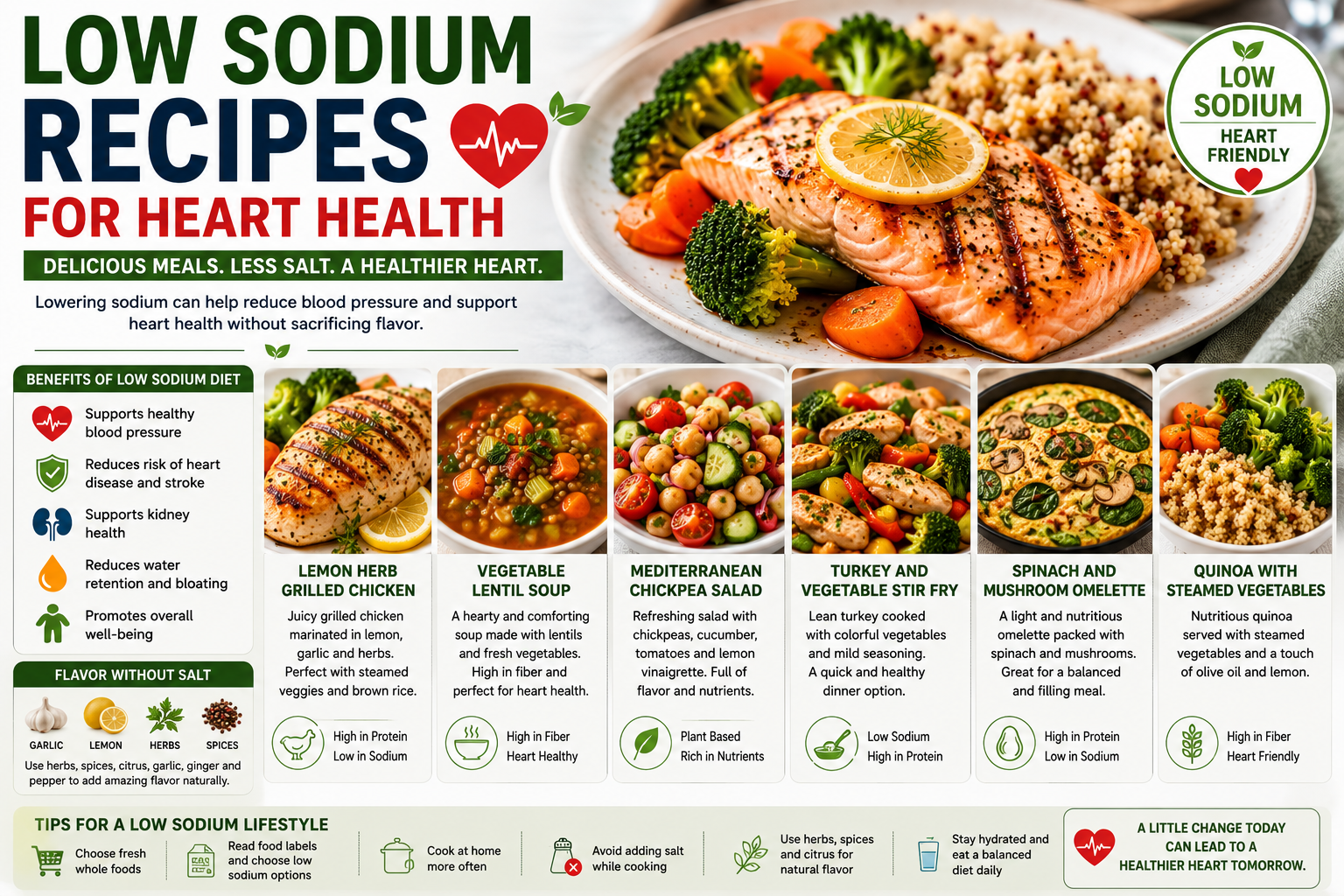
Excess sodium causes the body to retain water, placing additional strain on the heart and blood vessels. Over time, this can increase blood pressure and contribute to serious health conditions.
Reducing sodium intake may help:
- Support healthy blood pressure
- Reduce the risk of heart disease
- Lower the risk of stroke
- Improve kidney health
- Reduce fluid retention
- Promote overall cardiovascular wellness
Combining a low sodium diet with regular exercise and other healthy lifestyle habits can further improve heart health.
Heart-Healthy Ingredients for Low Sodium Cooking
Choosing naturally low sodium foods is the first step toward healthier meals.
Lean Proteins
- Skinless chicken breast
- Turkey
- Fresh fish
- Salmon
- Tuna
- Beans (no added salt)
- Lentils
- Tofu
Whole Grains
- Brown rice
- Quinoa
- Whole wheat pasta
- Oats
- Barley
Fresh Vegetables
- Broccoli
- Spinach
- Kale
- Carrots
- Bell peppers
- Courgettes
- Green beans
- Tomatoes
Fruits
- Apples
- Berries
- Oranges
- Bananas
- Pears
- Grapes
Healthy Fats
- Olive oil
- Avocados
- Unsalted nuts
- Chia seeds
- Flaxseeds
Natural Ways to Add Flavour Without Salt
Reducing salt does not mean your meals have to taste bland.
Try seasoning food with:
- Garlic
- Onion
- Lemon juice
- Lime juice
- Fresh basil
- Parsley
- Rosemary
- Thyme
- Black pepper
- Paprika
- Cumin
- Ginger
- Turmeric
Fresh herbs and spices enhance flavour while keeping sodium levels low.
Easy Low Sodium Recipes for Heart Health
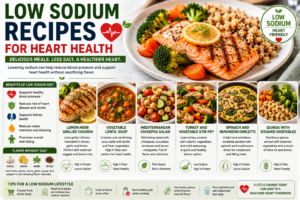
1. Lemon Herb Grilled Chicken
Ingredients
- 2 skinless chicken breasts
- 2 tablespoons olive oil
- Juice of one lemon
- Garlic
- Fresh parsley
- Black pepper
- Paprika
Instructions
- Mix olive oil, lemon juice, garlic, parsley, paprika, and pepper.
- Marinate the chicken for at least 30 minutes.
- Grill until fully cooked.
- Serve with steamed vegetables and brown rice.
Why it is heart healthy:
- High in lean protein
- Naturally low in sodium
- Rich in flavour without added salt
2. Baked Salmon with Quinoa and Steamed Broccoli
Ingredients
- Salmon fillets
- Quinoa
- Broccoli
- Olive oil
- Lemon slices
- Dill
- Black pepper
Instructions
Bake the salmon until flaky, cook the quinoa according to package instructions, steam the broccoli, and serve together with fresh lemon.
Health benefits:
- Rich in omega-3 fatty acids
- Supports heart health
- High in protein and fibre
3. Vegetable Lentil Soup
Ingredients
- Dried lentils
- Carrots
- Celery
- Onion
- Garlic
- Tomatoes
- Low sodium vegetable stock
- Spinach
Instructions
Simmer all ingredients until the lentils are tender. Stir in fresh spinach before serving.
Why you’ll love it:
- High in fibre
- Filling and nutritious
- Excellent for meal preparation
4. Mediterranean Chickpea Salad
Ingredients
- Chickpeas (no added salt)
- Cucumber
- Tomatoes
- Red onion
- Parsley
- Olive oil
- Lemon juice
Instructions
Combine all ingredients in a large bowl and toss with olive oil and lemon juice.
Benefits:
- No cooking required
- Rich in fibre
- Packed with vitamins
5. Turkey and Vegetable Stir Fry
Ingredients
- Lean turkey strips
- Broccoli
- Bell peppers
- Mushrooms
- Garlic
- Ginger
- Olive oil
- Low sodium soy sauce
Instructions
Cook the turkey, add vegetables, stir-fry until tender-crisp, and season lightly with low sodium soy sauce.
Health benefits:
- High protein
- Rich in vegetables
- Quick weekday meal
6. Spinach and Mushroom Omelette
Ingredients
- Eggs
- Fresh spinach
- Mushrooms
- Onion
- Olive oil
- Black pepper
Instructions
Cook the vegetables until tender, pour over beaten eggs, and cook until set.
Serve with whole grain toast and fresh fruit.
Foods to Limit on a Low Sodium Diet
Many processed foods contain surprisingly high levels of sodium.
Limit:
- Processed meats
- Instant noodles
- Canned soups with added salt
- Salty snacks
- Fast food
- Frozen ready meals
- Processed cheese
- Packaged sauces
- Pickled foods
Reading food labels helps you make healthier choices.
Tips for Reducing Sodium Every Day
Simple changes can significantly reduce sodium intake.
- Cook more meals at home.
- Choose fresh ingredients whenever possible.
- Rinse canned beans before use.
- Buy products labelled “low sodium” or “no added salt.”
- Taste food before adding salt.
- Replace salt with herbs and spices.
- Limit processed and packaged foods.
Consistency makes a meaningful difference over time.
Frequently Asked Questions
What is considered a low sodium meal?
A low sodium meal is prepared with fresh ingredients and contains minimal added salt or high sodium processed foods. Using herbs, spices, citrus juice, and garlic adds flavour without increasing sodium.
Can reducing sodium lower blood pressure?
For many people, reducing sodium intake can help support healthy blood pressure, especially when combined with regular physical activity and a balanced diet.
Which foods are naturally low in sodium?
Fresh vegetables, fruits, lean meats, fish, eggs, legumes, whole grains, and unsalted nuts are naturally low in sodium.
Is sea salt healthier than table salt?
Sea salt and table salt contain similar amounts of sodium by weight. Moderation is important regardless of the type of salt used.
Can I enjoy flavourful food on a low sodium diet?
Yes. Fresh herbs, garlic, onions, citrus juice, spices, and vinegar can create delicious meals without relying on excessive salt.
Conclusion
Preparing low sodium recipes for heart health is a practical way to support healthy blood pressure and reduce the risk of cardiovascular disease. By choosing fresh, nutrient-rich ingredients and seasoning meals with herbs, spices, and citrus instead of excess salt, you can enjoy satisfying dishes that benefit both your heart and your taste buds.
Whether you are preparing grilled chicken, baked salmon, hearty lentil soup, or colourful salads, small dietary changes can have a lasting impact. With thoughtful meal planning and consistent healthy habits, a low sodium lifestyle can become an enjoyable part of everyday living while helping you and your family maintain better long-term health.