

Introduction
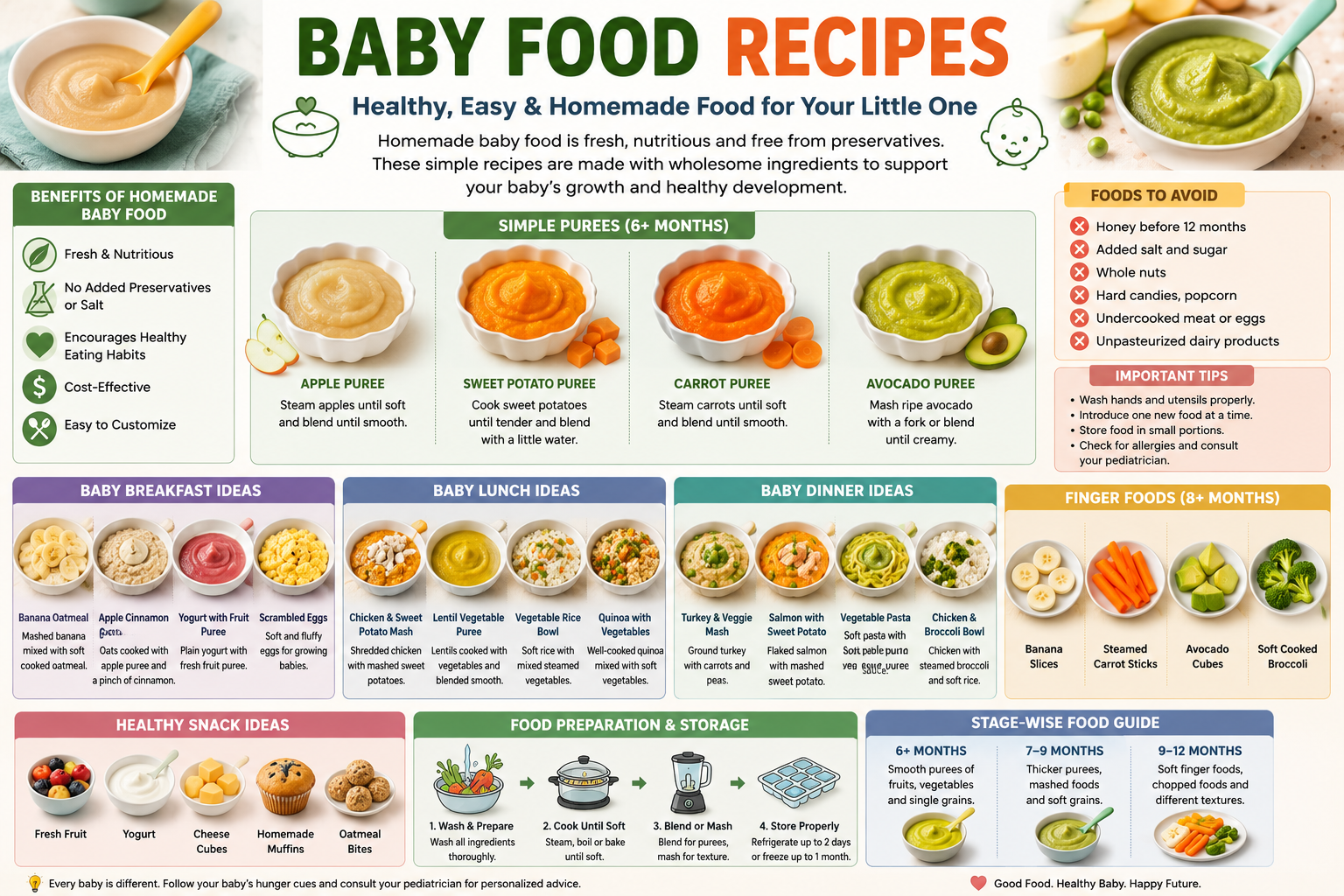
Baby food recipes provide parents with a simple and nutritious way to introduce their little ones to healthy eating habits. Preparing homemade baby food allows you to control the quality of ingredients, avoid unnecessary additives, and create fresh meals tailored to your baby’s age and developmental stage.
From smooth fruit and vegetable purees to soft finger foods and balanced toddler meals, homemade baby food can support healthy growth while helping babies explore new flavors and textures. With proper preparation and age-appropriate ingredients, making baby food at home is both affordable and rewarding.
This comprehensive guide covers everything you need to know about baby food recipes, including their benefits, recommended ingredients, meal ideas, preparation tips, and frequently asked questions.
What Are Baby Food Recipes?
Baby food recipes are meals specially prepared for infants and young children using fresh, wholesome ingredients. These recipes are designed to match a baby’s nutritional needs and developmental stage, gradually progressing from smooth purees to mashed foods and eventually soft finger foods.
Homemade baby food often includes:
- Fresh fruits
- Vegetables
- Whole grains
- Lean proteins
- Healthy fats
- Dairy products (when age appropriate)
Recipes should always be prepared according to your child’s age and the guidance of a pediatrician or healthcare professional.
Benefits of Homemade Baby Food
Preparing baby food at home offers several advantages.
Fresh and Nutritious
Homemade meals are made with fresh ingredients that retain their natural nutrients and flavor.
No Unnecessary Additives
Parents can avoid artificial preservatives, added sugars, excessive salt, and unnecessary flavorings.
Encourages Healthy Eating Habits
Introducing a variety of fruits, vegetables, grains, and proteins early can help babies develop a broader acceptance of healthy foods.
Cost-Effective
Preparing larger batches of homemade baby food is often more affordable than purchasing packaged options.
Easy to Customize
Parents can adjust textures and ingredients according to their baby’s age, preferences, and nutritional needs.
Essential Ingredients for Baby Food Recipes
Choose nutrient-rich ingredients that are suitable for your baby’s developmental stage.
Fruits
- Bananas
- Apples
- Pears
- Peaches
- Mangoes
- Avocados
- Blueberries
- Strawberries (age appropriate)
Vegetables
- Sweet potatoes
- Carrots
- Pumpkin
- Peas
- Broccoli
- Cauliflower
- Spinach
- Zucchini
Grains
- Oatmeal
- Brown rice
- Quinoa
- Whole grain cereal
Protein Sources
- Chicken
- Turkey
- Eggs
- Lentils
- Beans
- Fish (when recommended by your pediatrician)
- Plain yogurt
Healthy Fats
- Avocado
- Olive oil
- Nut butters (introduced according to current allergy guidance and pediatric recommendations)
Foods to Avoid for Babies
Certain foods should not be included in homemade baby food.
Avoid:
- Honey before 12 months of age
- Added salt
- Added sugar
- Whole nuts
- Hard candies
- Popcorn
- Unpasteurized dairy products
- Raw eggs
- Undercooked meat or seafood
Always introduce new foods one at a time and watch for signs of food allergies.
Baby Puree Recipes
Smooth purees are often the first foods introduced after milk feeding.
Apple Puree
Steam fresh apples until soft and blend until smooth.
Sweet Potato Puree
Cook sweet potatoes until tender and blend with water or breast milk for a creamy texture.
Carrot Puree
Steam carrots until soft and blend into a smooth consistency.
Avocado Puree
Mash ripe avocado with a fork for a naturally creamy first food.
Baby Breakfast Recipes
Nutritious breakfasts help provide energy for active babies.
Banana Oatmeal
Cook oats until soft and mix with mashed banana.
Apple Cinnamon Oats
Prepare oatmeal with steamed apples and a small pinch of cinnamon if age appropriate.
Yogurt with Fruit Puree
Plain full-fat yogurt served with mashed berries or banana.
Scrambled Eggs
Soft scrambled eggs for babies who are ready for textured foods.
Baby Lunch Recipes
Balanced lunches provide protein, vegetables, and healthy carbohydrates.
Chicken and Sweet Potato Mash
Cooked chicken blended or finely chopped with mashed sweet potatoes.
Lentil Vegetable Puree
Cook lentils with carrots and spinach until soft before blending.
Vegetable Rice Bowl
Soft rice mixed with steamed vegetables and shredded chicken.
Quinoa with Vegetables
Well-cooked quinoa combined with mashed vegetables.
Baby Dinner Recipes
Simple evening meals help introduce new textures and flavors.
Turkey and Vegetable Mash
Ground turkey cooked with carrots and peas until soft.
Salmon with Sweet Potato
Flaked cooked salmon served with mashed sweet potatoes.
Vegetable Pasta
Small soft pasta pieces mixed with vegetable puree.
Chicken and Broccoli Bowl
Finely chopped chicken served with steamed broccoli and soft rice.
Baby Finger Food Recipes
As babies develop chewing skills, finger foods become an important milestone.
Popular finger foods include:
- Banana slices
- Steamed carrot sticks
- Soft avocado cubes
- Cooked peas
- Scrambled eggs
- Soft cooked broccoli
- Small pasta pieces
- Toast strips
Always supervise babies while eating.
Healthy Toddler Snack Ideas
Nutritious snacks help support healthy growth between meals.
Healthy options include:
- Fresh fruit
- Cheese cubes
- Yogurt
- Homemade muffins
- Whole grain crackers
- Soft vegetable sticks
- Hummus
- Oatmeal bites
Tips for Preparing Homemade Baby Food
These simple practices make homemade baby food safer and more convenient.
Use Fresh Ingredients
Choose fresh, high-quality produce and lean proteins.
Cook Foods Thoroughly
Vegetables and meats should be fully cooked until soft enough for your baby’s developmental stage.
Freeze Individual Portions
Store baby food in small containers or freezer trays for convenient meal preparation.
Practice Good Food Safety
Wash hands, utensils, and produce thoroughly before preparing meals.
Introduce New Foods Gradually
Offer one new food at a time and wait several days before introducing another to monitor for allergies.
Common Mistakes to Avoid
Avoid these common mistakes when making homemade baby food.
Adding Salt or Sugar
Babies do not need added salt or sugar in their meals.
Serving Unsafe Foods
Avoid foods that present choking hazards or are not recommended for infants.
Ignoring Food Texture
Adjust food consistency as your baby grows and develops chewing skills.
Preparing Large Portions Without Proper Storage
Store homemade baby food safely in the refrigerator or freezer and follow recommended storage guidelines.
Frequently Asked Questions
When can babies start eating solid foods?
Most babies begin solid foods around six months of age, but parents should follow the advice of their pediatrician.
Is homemade baby food healthier than store-bought?
Homemade baby food allows greater control over ingredients and freshness, although many commercial baby foods can also be nutritious.
Can baby food be frozen?
Yes. Homemade baby food freezes well when stored in airtight containers or freezer-safe trays.
How long can homemade baby food be refrigerated?
Storage times vary depending on the ingredients. Always follow current food safety recommendations and discard any food that appears spoiled or has been left at room temperature too long.
Should I consult a pediatrician before introducing new foods?
Yes. A pediatrician can provide personalized guidance based on your baby’s age, growth, and medical history.
Final Thoughts
Homemade baby food recipes offer a practical and nutritious way to support your baby’s healthy growth and development. By using fresh ingredients, preparing age-appropriate meals, and gradually introducing new flavors and textures, parents can help build positive eating habits from the very beginning.
From simple fruit and vegetable purees to balanced toddler meals and healthy snacks, homemade baby food provides flexibility, quality, and peace of mind. Combined with guidance from your pediatrician and proper food safety practices, these recipes can become an important part of your child’s journey toward lifelong healthy eating.