

Introduction
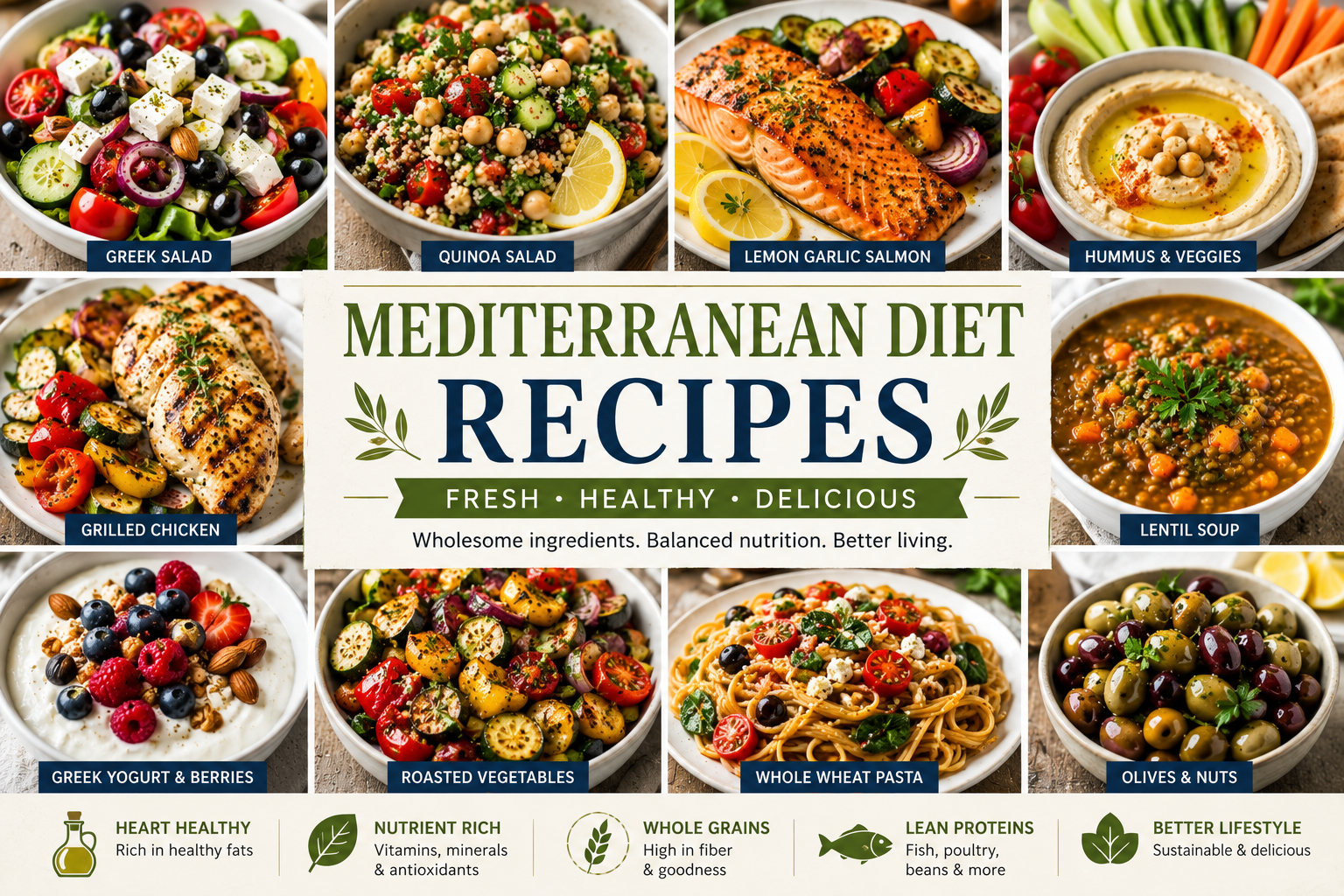
Mediterranean diet recipes are celebrated for their fresh ingredients, vibrant flavors, and exceptional nutritional value. Inspired by the traditional eating habits of countries bordering the Mediterranean Sea, this dietary pattern emphasizes whole foods, healthy fats, lean proteins, legumes, whole grains, fruits, and vegetables.
Unlike restrictive diets, the Mediterranean diet encourages balanced eating and long-term healthy habits. Whether your goal is improving heart health, maintaining a healthy weight, or simply enjoying wholesome meals, Mediterranean recipes offer a delicious and sustainable approach to everyday cooking.
This guide explores everything you need to know about Mediterranean diet recipes, including their benefits, essential ingredients, meal ideas, cooking tips, and answers to frequently asked questions.
What Are Mediterranean Diet Recipes?
Mediterranean diet recipes are meals based on the traditional cuisines of countries such as Greece, Italy, Spain, and southern France. They prioritize fresh, minimally processed ingredients and healthy cooking methods.
A typical Mediterranean meal includes:
- Fresh vegetables
- Fruits
- Whole grains
- Legumes
- Nuts and seeds
- Olive oil
- Fish and seafood
- Lean poultry
- Herbs and spices
- Moderate amounts of dairy
Red meat and highly processed foods are generally consumed less frequently.
Health Benefits of Mediterranean Diet Recipes
The Mediterranean diet is widely recognized as one of the healthiest eating patterns in the world.
Supports Heart Health
Olive oil, nuts, fish, and vegetables provide healthy fats and nutrients that support cardiovascular health.
Rich in Nutrients
Mediterranean meals are naturally packed with vitamins, minerals, antioxidants, and dietary fiber.
Supports Healthy Weight Management
The combination of whole foods, healthy fats, and lean proteins helps promote fullness and balanced eating habits.
Encourages Long-Term Healthy Eating
Rather than focusing on restrictions, the Mediterranean diet promotes sustainable food choices that are easy to maintain.
Promotes Digestive Health
High-fiber foods such as vegetables, legumes, fruits, and whole grains contribute to healthy digestion.
Essential Mediterranean Diet Ingredients
Keeping these staples in your kitchen makes Mediterranean cooking simple and enjoyable.
Healthy Fats
- Extra virgin olive oil
- Olives
- Avocados
- Nuts
- Seeds
Vegetables
- Tomatoes
- Cucumbers
- Spinach
- Eggplant
- Zucchini
- Bell peppers
- Broccoli
- Onions
Fruits
- Oranges
- Apples
- Grapes
- Figs
- Berries
- Lemons
Protein Sources
- Salmon
- Tuna
- Sardines
- Shrimp
- Chicken
- Turkey
- Eggs
- Chickpeas
- Lentils
Whole Grains
- Brown rice
- Quinoa
- Whole wheat pasta
- Barley
- Farro
- Oats
Herbs and Seasonings
- Basil
- Oregano
- Rosemary
- Thyme
- Garlic
- Parsley
- Black pepper
Foods to Limit
Mediterranean diet recipes reduce the consumption of:
- Processed foods
- Sugary beverages
- Refined grains
- Processed meats
- Excess sweets
- Fried foods
- Highly processed snacks
The emphasis remains on fresh, natural ingredients.
Mediterranean Breakfast Recipes
Start your day with nutritious Mediterranean-inspired meals.
Greek Yogurt with Fresh Fruit
Plain Greek yogurt topped with berries, walnuts, and a drizzle of honey.
Vegetable Omelet
Eggs cooked with spinach, tomatoes, onions, and herbs.
Avocado Toast
Whole grain bread topped with mashed avocado, tomatoes, and olive oil.
Overnight Oats
Oats soaked overnight with yogurt, chia seeds, almonds, and fresh fruit.
Mediterranean Lunch Recipes
Fresh, colorful lunches are a hallmark of Mediterranean cuisine.
Greek Salad
Tomatoes, cucumbers, olives, onions, feta cheese, and olive oil dressing.
Chickpea Salad
Chickpeas combined with cucumbers, parsley, tomatoes, lemon juice, and olive oil.
Grilled Chicken Bowl
Grilled chicken served with quinoa, roasted vegetables, and tzatziki sauce.
Lentil Soup
A hearty soup made with lentils, vegetables, herbs, and olive oil.
Mediterranean Dinner Recipes
Dinner focuses on lean proteins and plenty of vegetables.
Lemon Garlic Salmon
Fresh salmon baked with olive oil, garlic, lemon, and herbs.
Grilled Chicken with Vegetables
Chicken breast served with roasted zucchini, peppers, and eggplant.
Shrimp and Whole Wheat Pasta
Whole wheat pasta tossed with shrimp, tomatoes, garlic, spinach, and olive oil.
Stuffed Bell Peppers
Bell peppers filled with quinoa, vegetables, herbs, and lean turkey.
Mediterranean Snack Recipes
Healthy snacks help maintain energy throughout the day.
Popular choices include:
- Mixed nuts
- Fresh fruit
- Hummus with vegetables
- Olives
- Greek yogurt
- Whole grain crackers
- Roasted chickpeas
- Cucumber slices with tzatziki
Mediterranean Dessert Recipes
Desserts are typically simple and naturally sweet.
Greek Yogurt with Honey
Creamy yogurt topped with walnuts and a light drizzle of honey.
Fresh Fruit Salad
Seasonal fruits with mint and citrus juice.
Baked Pears
Pears baked with cinnamon and chopped almonds.
Berry Parfait
Layers of Greek yogurt, berries, and granola.
Tips for Cooking Mediterranean Diet Recipes
Following a few basic principles can make Mediterranean cooking easy.
Use Olive Oil as Your Primary Fat
Extra virgin olive oil is a staple of Mediterranean cuisine.
Fill Half Your Plate with Vegetables
Vegetables provide fiber, vitamins, and vibrant flavor.
Choose Whole Grains
Replace refined grains with brown rice, quinoa, barley, or whole wheat products.
Eat Fish Regularly
Include fish or seafood several times each week when possible.
Season with Herbs Instead of Excess Salt
Fresh herbs and spices add flavor naturally.
Common Mistakes to Avoid
Avoid these common errors when following Mediterranean recipes.
Depending on Processed Foods
Packaged convenience foods do not reflect the traditional Mediterranean eating pattern.
Eating Too Much Red Meat
Lean poultry, fish, legumes, and seafood are generally better choices.
Ignoring Portion Sizes
Even healthy foods should be enjoyed in balanced portions.
Forgetting Healthy Fats
Healthy fats such as olive oil and nuts are an important part of the Mediterranean diet.
Frequently Asked Questions
Is the Mediterranean diet good for beginners?
Yes. The Mediterranean diet focuses on simple, accessible ingredients and balanced meals, making it suitable for beginners.
Can I lose weight with Mediterranean recipes?
Many people find that Mediterranean eating supports healthy weight management when combined with regular physical activity and appropriate portion sizes.
Are Mediterranean recipes expensive?
Not necessarily. Beans, lentils, seasonal vegetables, whole grains, and canned fish are affordable ingredients commonly used in Mediterranean cooking.
Is dairy allowed on the Mediterranean diet?
Yes. Moderate amounts of yogurt and cheese, particularly Greek yogurt and feta cheese, are commonly included.
Can vegetarians follow the Mediterranean diet?
Absolutely. Legumes, vegetables, fruits, nuts, seeds, and whole grains provide excellent vegetarian meal options.
Final Thoughts
Mediterranean diet recipes combine fresh ingredients, balanced nutrition, and timeless flavors to create meals that are both satisfying and nourishing. With an emphasis on vegetables, whole grains, healthy fats, lean proteins, and natural ingredients, this eating pattern supports overall wellness while making everyday cooking enjoyable.
Whether you are preparing breakfast, lunch, dinner, snacks, or desserts, Mediterranean recipes offer endless opportunities to enjoy wholesome food without unnecessary restrictions. By choosing fresh ingredients and simple cooking methods, you can build healthy eating habits that are both practical and sustainable for years to come.