
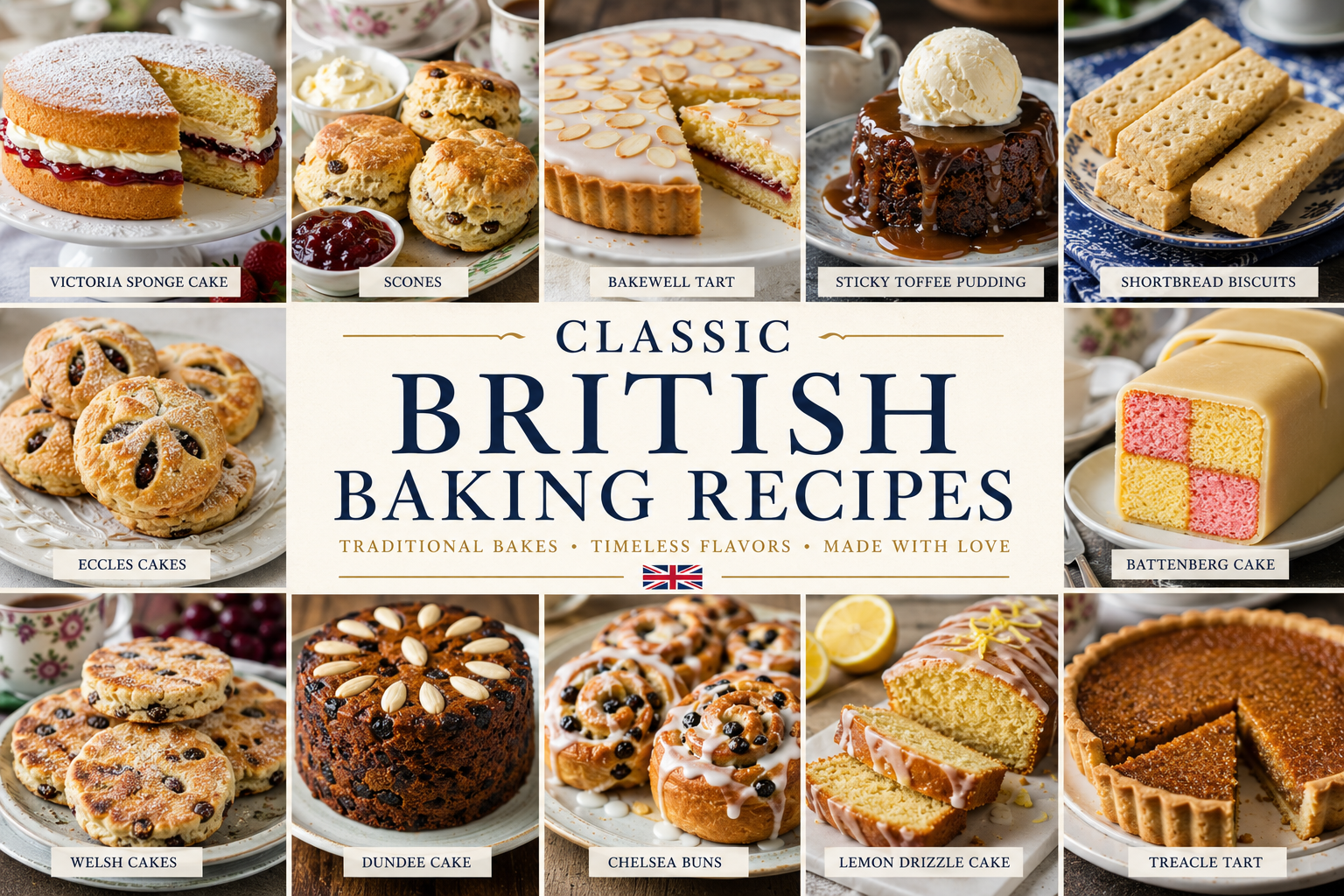
British baking has a long and celebrated history, with recipes that have been passed down through generations. From buttery scones served at afternoon tea to rich fruit cakes enjoyed during the holidays, traditional British baked goods are known for their simple ingredients, comforting flavors, and timeless appeal.
Whether you are an experienced baker or just starting out, classic British baking recipes offer something for every occasion. This guide explores some of the most iconic baked treats from the United Kingdom, along with helpful baking tips and answers to common questions.
What Makes British Baking Unique?
British baking focuses on quality ingredients, balanced flavors, and traditional methods. Many recipes rely on pantry staples such as flour, butter, eggs, sugar, dried fruit, and seasonal spices. Rather than overly sweet desserts, British baked goods often emphasize texture and rich, natural flavors.
Many of these recipes are associated with family gatherings, afternoon tea, festive celebrations, and Sunday dinners, making them an important part of British food culture.
Classic British Baking Recipes
Victoria Sponge Cake
Victoria sponge cake is one of Britain’s most famous cakes. It consists of two light sponge layers filled with strawberry jam and whipped cream or buttercream before being dusted with powdered sugar.
Traditional Scones
Freshly baked scones are a centerpiece of British afternoon tea. They are served warm with clotted cream, strawberry jam, and a pot of tea.
Bakewell Tart
Originating from Derbyshire, Bakewell tart features a crisp pastry shell filled with raspberry jam and almond-flavored frangipane, often topped with sliced almonds or icing.
Sticky Toffee Pudding
Although commonly served as a dessert, sticky toffee pudding begins as a baked sponge cake made with chopped dates and finished with a rich toffee sauce.
Eccles Cakes
These flaky pastries are filled with currants, butter, sugar, and warm spices before being baked until golden and crisp.
Shortbread Biscuits
Traditional Scottish shortbread is made with butter, flour, and sugar, creating a rich, crumbly texture that pairs perfectly with tea or coffee.
Battenberg Cake
Recognizable by its pink and yellow sponge squares wrapped in marzipan, Battenberg cake is both visually striking and delicious.
Welsh Cakes
Cooked on a griddle rather than baked in an oven, Welsh cakes contain dried fruit and spices and are lightly dusted with sugar.
Dundee Cake
This traditional Scottish fruit cake is packed with dried fruits and topped with whole blanched almonds arranged in a decorative pattern.
Chelsea Buns
Soft sweet buns filled with currants, cinnamon, butter, and brown sugar are glazed after baking to create a shiny finish.
Fruit Scones
A variation of the traditional scone, fruit scones include raisins or currants for added sweetness and texture.
Rock Cakes
These rustic cakes have a rough appearance but a soft interior filled with dried fruits and warm spices.
Treacle Tart
A classic British dessert made with golden syrup, breadcrumbs, and lemon juice inside a flaky pastry crust.
Lemon Drizzle Cake
A moist sponge cake soaked with fresh lemon syrup to create a bright citrus flavor and tender texture.
Gingerbread Loaf
This spiced loaf combines ginger, cinnamon, and golden syrup for a rich and aromatic bake that improves in flavor over time.
Essential Ingredients for British Baking
Most traditional British baking recipes use readily available ingredients.
- Plain flour
- Self-raising flour
- Unsalted butter
- Eggs
- Caster sugar
- Brown sugar
- Baking powder
- Golden syrup
- Dried currants
- Raisins
- Mixed spice
- Cinnamon
- Nutmeg
- Vanilla extract
- Fresh lemons
Using high-quality ingredients helps achieve the authentic taste and texture associated with classic British baked goods.
Tips for Successful British Baking
Follow these simple tips for consistently excellent results.
- Measure ingredients accurately.
- Bring butter and eggs to room temperature before baking.
- Avoid overmixing cake batters.
- Preheat the oven before placing baked goods inside.
- Use parchment paper to prevent sticking.
- Allow cakes to cool completely before decorating.
- Store baked goods in airtight containers to maintain freshness.
Perfect Occasions for British Bakes
Traditional British baked goods are suitable for many occasions.
- Afternoon tea gatherings
- Family celebrations
- Birthday parties
- Holiday baking
- Weekend desserts
- Coffee mornings
- School bake sales
- Homemade gifts
Their timeless flavors make them popular throughout the year.
Frequently Asked Questions
What is the most famous British baked dessert?
Victoria sponge cake is widely considered one of the most iconic British cakes. Other favorites include Bakewell tart, sticky toffee pudding, lemon drizzle cake, and treacle tart.
What is served with traditional British scones?
Scones are traditionally served warm with clotted cream and strawberry jam alongside freshly brewed tea.
Are British baking recipes beginner-friendly?
Yes. Many traditional recipes use simple techniques and basic ingredients, making them suitable for beginner bakers.
Can British baked goods be made ahead of time?
Most cakes, biscuits, and pastries can be prepared in advance and stored properly for several days while maintaining their flavor and texture.
Conclusion
Classic British baking recipes continue to be loved for their simplicity, comforting flavors, and rich history. From the light and elegant Victoria sponge cake to buttery shortbread and traditional Bakewell tart, these baked treats represent the best of British home baking. Whether you are preparing afternoon tea, celebrating a special occasion, or simply enjoying homemade desserts, these timeless recipes offer delicious results that never go out of style.